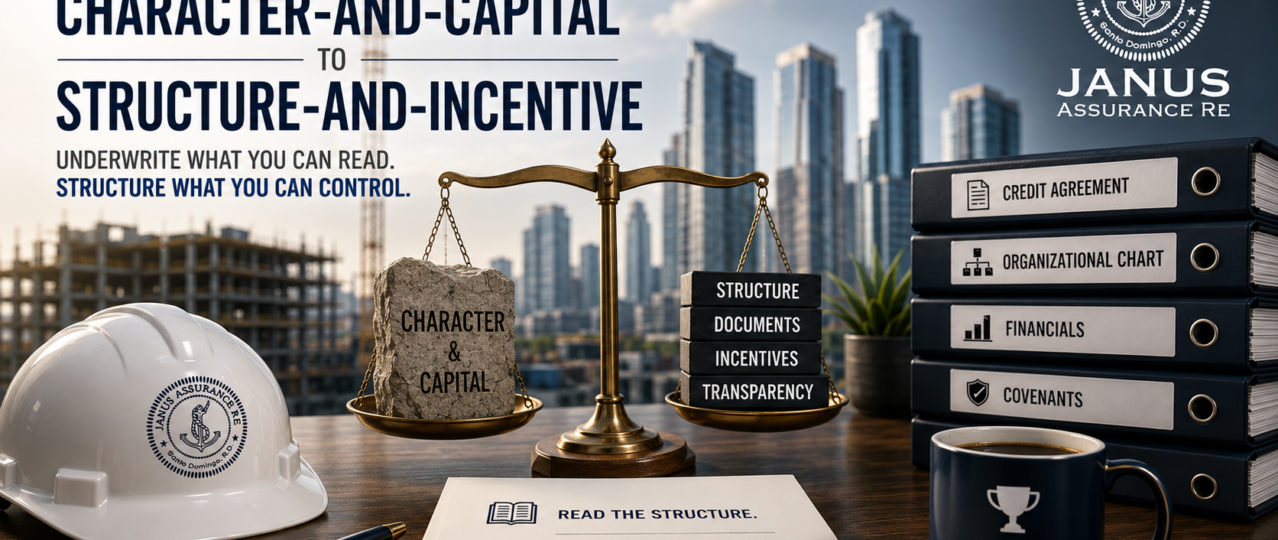
From Character-and-Capital to Structure-and-Incentive: Why the Private Equity Surety Panic Is Mostly Horseshit
The surety industry has worked itself into a lather over private equity penetration of the contractor market. Read the trade press, sit through a CFMA panel, or listen to the graybeards at any surety association meeting and you will hear the same funeral dirge, . . . personal indemnity is dead, the balance sheets are stripped, the sponsors will abandon us all, and the sky is scheduled to fall sometime next quarter, blah, blah, blah. I have spent the better part of three decades writing bonds, and you need to hear that most of this hand-wringing is unearned. The private equity surety question is not whether these accounts are writable. They are. The question is whether the industry can shed its nostalgia for a founder-owner credit model that was never as good as we wanted to bullshit ourselves into believing.
The Fiction We Are Mourning
Let us be honest about what the traditional structure actually delivered. The closely held contractor gave us a general indemnity agreement signed by an owner whose net worth was concentrated in the very company we were bonding, pledged to his bank, or parked in illiquid real estate he would fight us for through three years of litigation. By the time the account failed, the personal indemnity we priced so dearly was worth roughly the paper it was printed on. Anyone who has actually worked salvage knows this. The GIA’s real function on the majority of accounts was behavioral leverage, a psychological instrument, not a recovery instrument. We told ourselves a story about character and capital because the story was comforting, and because the alternative was admitting that our security package was, in economic substance, an unsecured bet on one man’s competence and honesty.
What else did that beloved traditional structure deliver? Compiled statements prepared by a strip-mall accountant. Work-in-process schedules assembled the night before the agency visit. Succession plans consisting of a shrug and a son-in-law. Key-man risk so concentrated that a single myocardial infarction could convert a performing account into a claim file. The sixty-eight-year-old principal quietly harvesting the company through his final three fiscal years while the underwriter admired his handshake. These are not edge cases. These are the modal pathologies of the closely held contractor book, and they have driven more frequency losses than any leveraged buyout ever will.
What Private Equity Actually Changes
Private equity ownership converts a character-and-capital risk into a structure-and-incentive risk. That is a transformation, not a degradation, and underwriters who cannot tell the difference should find other work. Under sponsor ownership, the credit story migrates from the person to the documents: the capital structure, the credit agreement, the sponsor’s revealed behavior across its portfolio, and the incentive architecture of the hold period. Every one of those things is knowable. Every one of them can be read, verified, covenanted, and priced. Compare that to divining the character of a founder from a country club lunch and tell me which underwriting exercise is more rigorous.
Yes, the LBO strips equity. Yes, acquisition debt sits on the balance sheet, sometimes with PIK toys compounding in the mezzanine. Yes, the fund will firewall itself from indemnity and yes, a sponsor’s support is an option that gets repriced quarterly against exit value. I concede all of it, and none of it justifies the pearl-clutching, because every one of those risks is visible in documents you can demand and structure around. The founder’s deterioration was invisible until it was terminal. The sponsor’s leverage is disclosed on page one of the credit agreement. Give me the risk I can read.
Meanwhile, the sponsor delivers what the founder never could: monthly closes, audited statements, a CFO who understands percentage-of-completion accounting and covenant reporting, board oversight, and an owner with both the capacity and, inside the hold period, the motive to write a check when the portfolio company stumbles. A distressed asset destroys the fund’s exit math, so mid-hold sponsor support is not charity, it is self-interest, which is the most reliable motive in commerce. I am aware of no loss data demonstrating that PE-owned contractors default at materially higher frequency than closely held contractors of comparable size. The private equity surety panic rests on anecdote and aesthetics, not actuarial evidence.
Where the Real Risk Lives, and Why It Does Not Scare Me
I am not selling naivete. The genuine differential between the structures lives in the tails and the aggregates, and I am going to name them. First, the abandonment option: a founder fights past economic rationality, while a sponsor can decide on a Tuesday to hand the keys to the lenders. Second, the chosen balance sheet: a dividend recapitalization can lawfully extract the capital you underwrote at a speed no closely held analog can match. Third, correlation: five bolt-ons under one platform are one risk wearing five obligee lists, sharing cash management and a cross-defaulted credit facility.
Fine. Those are real. They are also exactly the kinds of risks that surety underwriting, properly practiced, exists to structure around. Tail risk that is identifiable and contractible is not a reason to decline. It is a reason to draft. The industry’s response to private equity surety submissions has too often been fear-based declination or collateral demands so punitive they amount to declination with extra steps. That is not underwriting. It’s youhavenoballs wearing a risk-management costume.
How to Write These Accounts, . . . that is, if You are Intersted in Making Money
No apology, get off the high horse and compete for this business. Underwrite the sponsor as the character component. Track record with construction-adjacent portfolio companies, fund vintage, remaining dry powder, and, above all, revealed behavior: has this shop supported troubled assets or walked? A sponsor that injected capital into a struggling platform in 2021 has told you more about itself than any founder’s handshake ever told your predecessors. Sponsors are repeat players across an entire portfolio, and reputational capital in the lending and surety markets is worth real money to them. Price that.
Demand the documents and actually read them. Full organizational chart down to the fund, the credit agreement, the intercreditor terms, and leverage through the entire stack. Strike the adjusted-EBITDA add-backs from your own covenant calculations and measure working capital and tangible net worth on unadjusted figures. If the sponsor balks at disclosure, that reluctance is your answer, and it cost you nothing to obtain.
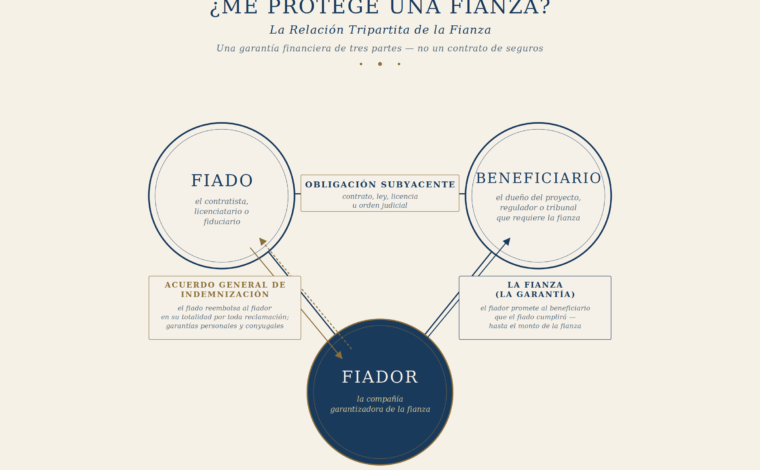
Substitute structure for indemnity instead of mourning indemnity. A written surety credit agreement with financial covenants, restrictions on distributions and affiliate payments while bonded obligations remain open, funds control scaling with the gap between capacity requested and capital demonstrated, and, where the exposure warrants, a capped completion guarantee, a keep-well triggered by covenant breach, or an equity commitment letter tied to the bonded backlog. A full fund guarantee is a unicorn. Stop asking for unicorns and start negotiating instruments sponsors will actually sign. Their willingness to negotiate any of them is itself diagnostic, and a sponsor that engages the surety during acquisition diligence rather than after the capital structure locks is telling you it wants a program, not a favor.
Underwrite the platform, not the file. Aggregate exposure across every bolt-on under common sponsorship, map the cash management and cross-default architecture, and set capacity at the platform level. The correlation risk only kills you if you pretend it is not there.
Time-band the hold. Sponsor incentives are not constant across fund life. Year two of a fresh platform with dry powder behind it is a different credit than year six after a failed sale process. Build hold-period position into your pricing and your review triggers, and tighten the structure as the fund ages. This is not exotic. It is calendar awareness.
Do all of this, and I bet that the well-structured private equity surety account is better than the median closely held account, i.e., superior reporting, professional management, an owner with deep pockets and aligned incentives through the hold, and documentary transparency the founder model never offered. The producers who educate sponsors early, and the underwriters who price this business on evidence rather than folklore, are going to own a segment that the pearl-clutchers surrendered without a fight.
The Bottom Line
Private equity penetration of the contractor market is not a crisis. It is a repricing event, and repricing events reward the participants who can read documents faster than they can recite anxieties. The character-and-capital model was always partly mythology, propped up by indemnity instruments that recovered pennies and character assessments performed over lunch. The structure-and-incentive model asks more of the underwriter, which is precisely why the lazy end of the market hates it. The rest of us should be writing this business, structuring it intelligently, and collecting the premium the frightened have left on the table. The private equity surety opportunity belongs to those who do the damn work.
Constantin Poindexter, MA, JD, CPCU, AFSB, ARe, ASLI, AIS, AINS, CPLP, the founder of Surety One, Inc. and CEO of Janus Assurance Re, and the author of The Contractor’s Guide to Surety Bonds.