
On April 6, 2026, Governor Polis signed Senate Bill 26-074 into law, and on August 12, 2026, it took effect. Most commentary on the enactment has focused on the private mechanics’ lien statute, and understandably so. The bill inserts the words “whether disputed or undisputed” into the definition of lienable value, expressly authorizes liens for delay, lost productivity, and disruption costs, and creates a statutory good faith safe harbor against the excessive lien penalty (Colorado General Assembly 2026, secs. 1 and 2). That is a genuine shift in Colorado construction law.
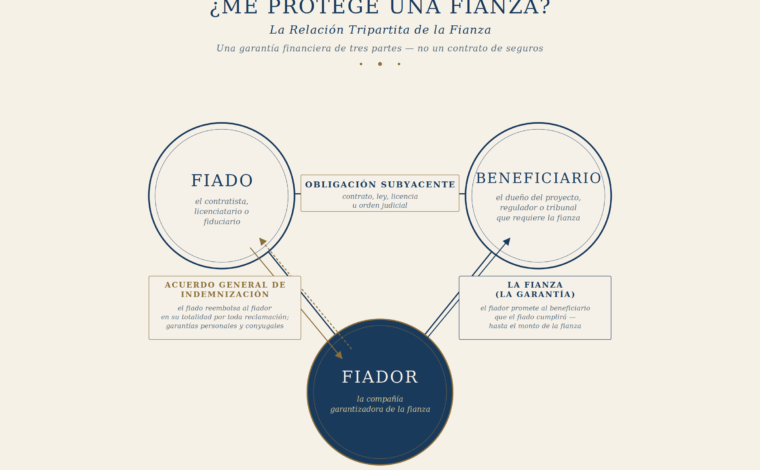
For a surety, and for the reinsurer standing behind that surety, the more consequential half of the bill is the half that received less attention. SB 26-074 makes identical changes to Article 26 of Title 38, the public works bond statute commonly called Colorado’s Little Miller Act. The bill’s own title says as much: it concerns “clarification of the penalty for claiming an excessive amount in a public construction performance bond dispute” (Colorado General Assembly 2026, title). The private lien amendments were harmonizing measures. The legislative target was the public works verified statement of claim and the bond claim that accompanies it. This essay examines what that means for Colorado payment bond claims, for the sureties that write them, and for the reinsurance treaties that absorb their volatility.
The Statutory Architecture Before the Amendment
Colorado, like every state, prohibits mechanics’ liens against public property. In their place, Colo. Rev. Stat. § 38-26-105 requires contractors on public works contracts exceeding fifty thousand dollars to furnish a payment bond, and § 38-26-107 permits any unpaid supplier of labor, materials, or rental equipment to file a verified statement of claim with the contracting body before final settlement. The filing obligates the public owner to withhold funds sufficient to satisfy the claim, and in practice the claimant proceeds against both the retained funds and the surety’s bond (Colo. Rev. Stat. § 38-26-107).
Two features of the pre-amendment statute constrained claim severity. First, the verified statement was limited to amounts “due and unpaid on account of the claim,” and Colorado courts read that language as tethered to the cost of performing the work itself. Second, § 38-26-110 imposed a severe penalty for overreaching. A claimant who filed a verified statement or asserted a bond claim “for an amount greater than the amount due without a reasonable possibility that the amount claimed is due and with the knowledge that the amount claimed is greater than the amount due” forfeited all rights to the amount claimed and became liable for every dollar of costs and attorney fees the principal and surety incurred in “bonding over, contesting, or otherwise responding” to the claim (Colo. Rev. Stat. § 38-26-110(1), pre-amendment text).
The private side mirrored this structure. Colo. Rev. Stat. § 38-22-101(1) granted a lien “for the value” of labor, services, and materials furnished, and § 38-22-128 imposed forfeiture and fee shifting for knowingly excessive liens. Colorado courts had long held that the lien reaches only the reasonable value of what was actually incorporated into the improvement, and that contract damages flowing from another party’s default are something different in kind (Tabor v. Armstrong 1886; Independent Trust Corp. v. Stan Miller, Inc. 1990).
The Wadsworth Decision and the Legislative Response
The proximate cause of SB 26-074 was the Colorado Supreme Court’s 2026 decision in Ralph L. Wadsworth Construction Co. v. Regional Rail Partners. The court held that a public works verified statement of claim could not include purely consequential damages for delay and disruption, such as lost profits and idle equipment costs, because the statute confined recoverable amounts to costs incurred in performing the contracted work (Ralph L. Wadsworth Construction Co. v. Regional Rail Partners 2026). The holding was doctrinally consistent with a line of authority reaching back to Tabor, which permitted a lien for extra labor caused by construction errors but denied one for “damages and expenses incurred through enforced idleness” (Tabor v. Armstrong 1886).
The General Assembly disagreed with the result as a matter of policy. SB 26-074 amends § 38-26-107(1) to allow a verified statement of “the amount due and unpaid on account of the claim, whether the amount is disputed or undisputed,” and adds the following sentence: “Nothing in this article 26 prohibits the inclusion of costs otherwise allowed under a contract in a verified statement of claim, including costs incurred as a result of delay, lost productivity, or other disruption to the work” (Colorado General Assembly 2026, sec. 3). The same section adds “equipment” and “services” to the categories of furnished value that support a claim, modestly widening the class of eligible claimants.
Section 4 of the bill then rewrites the excessive claim penalty. Three changes matter. The forfeiture language shifts from “all rights to the amount claimed” to all rights to the “verified statement of claim,” which preserves the claimant’s underlying contract action even when the statutory remedy is lost. A new subsection (2) provides that a judicial award of less than the claimed amount “does not render that amount excessive” if the claimant “had a good faith basis to believe the amount in the verified statement of claim was due at the time of filing.” A new subsection (3) defines “amount due” as the sum a person “reasonably believes, in good faith, represents the value” of what was furnished, “whether or not the amount is unliquidated or disputed” (Colorado General Assembly 2026, sec. 4).
Critically, the penalty provision, and therefore the safe harbor that now qualifies it, applies not only to verified statements filed with the public owner but to any person who “asserts a claim against a principal or surety that has furnished a bond under this article 26” (Colo. Rev. Stat. § 38-26-110(1)). The good faith protection extends to demands made directly on the payment bond.
What Changed for the Surety? The practical effect on Colorado payment bond claims can be stated in three propositions.
Claim severity rises. Before August 12, 2026, a subcontractor whose work was disrupted by owner design changes or by a general contractor’s sequencing failures could recover its direct costs on the bond but had to pursue delay and productivity losses in a separate contract action, where the surety was not a party. Those consequential amounts are now within the statutory claim, provided the subcontract permits their recovery. On a heavy civil or vertical project with a compressed schedule, delay and disruption components routinely exceed the direct cost of the disputed work. The penal sum of the bond does not change, but the fraction of it that a single claim can reach does.
Claim frequency rises. The excessive claim penalty operated as a filter. Faced with forfeiture and mandatory fee liability, subcontractors and suppliers filed for conservative, well-documented amounts and left contested items out. The safe harbor removes that incentive. A claimant who files for everything it believes in good faith is due, including disputed change orders and unliquidated delay, now bears little downside if a court later awards less. The Colorado Supreme Court had already required proof of knowing overstatement approaching fraudulent intent before the penalty attached; the statute now codifies that reading and adds an express good faith definition of “due” (Honnen Equipment Co. v. Never Summer Backhoe Service, Inc. 2011; Colorado General Assembly 2026, sec. 4).
The surety’s threshold defense weakens. Under the prior text, an excessive claim was a claim-killing defense: forfeiture of all rights to the amount claimed. Under the amended text, the defense produces forfeiture of the verified statement of claim only, and it is available only against a claimant who lacked any reasonable possibility that the amount was due and knew it. The realistic consequence is that fewer Colorado payment bond claims will be disposed of at the pleadings stage and more will proceed to adjudication of the underlying delay and productivity questions, with a corresponding rise in loss adjustment expense.
The Contract Clause Is Now the Underwriting File
The amendment contains one important limiting phrase. Delay, lost productivity, and disruption costs are bondable only when they are “costs otherwise allowed under a contract” (Colorado General Assembly 2026, secs. 1 and 3). The statute does not create a right to delay damages. It permits the assertion, in the statutory claim, of delay damages the contract already allows.
This transforms a routine drafting question into a first-order surety underwriting question. A general contractor whose standard subcontract contains an enforceable no damages for delay clause has, by contract, kept consequential delay outside the bond. A general contractor whose subcontracts are silent, or whose clauses are drafted so broadly that Colorado courts will decline to enforce them, has not. The two contractors present materially different payment bond exposures on identical projects, and nothing in the bond form or the project scope reveals the difference. Only the subcontract does.
Contract surety underwriters writing Colorado public work should now request the principal’s standard form subcontract and purchase order terms as part of the account file, and should specifically evaluate the delay damages clause, the change order and notice provisions that condition it, and any flow down of owner delay remedies. Treaty reinsurers should expect ceding companies to be able to describe that review. An account whose subcontract forms have not been examined since the effective date is an account whose Colorado payment bond claims exposure has not been measured.
The Private Side: Release Bonds and the Owner’s Lost Leverage
Although the private lien amendments are secondary to the surety analysis, they are not irrelevant to it. Colorado permits a property owner or contractor to discharge a recorded mechanics’ lien by substituting a mechanic’s lien release surety bond, and the penal sum of that bond is set by statute as a multiple of the lien amount (Colo. Rev. Stat. § 38-22-131). Colorado also permits a principal contractor to furnish a blanket bond before construction begins that prevents liens from attaching at all (Colo. Rev. Stat. § 38-22-129). Both instruments are priced and collateralized off the lien amount or the contract price. When lien statements begin to carry line items for delay and disruption, release bond penal sums scale with them, and the indemnitor’s exposure under the general indemnity agreement scales in turn.
The amendment also reshapes the negotiating dynamic between owners and general contractors on private work. The excessive lien penalty gave owners a credible threat that disciplined lien amounts and encouraged early compromise. That threat is now largely theoretical. Owners and lenders should expect larger, more detailed lien statements and should expect to carry that exposure longer. The bill’s practical message is that prompt payment and early dispute resolution have become the owner’s principal risk management tools, because the statutory penalty is no longer one of them.
A Drafting Question the Courts Will Eventually Answer
One textual feature of the private side deserves scholarly attention. The new § 38-22-128(3) defines an amount as “due” if the claimant reasonably believes it represents the value of labor or materials “furnished or supplied to a contractor, as described in section 38-22-101(1)” (Colorado General Assembly 2026, sec. 2). That phrasing appears to have been carried over from the public works definition, where every claimant necessarily furnishes to a contractor or its subcontractor. On private projects, however, first-tier claimants furnish directly to the owner. A strict textual reading would confine the good faith safe harbor to sub-tier lien claimants and leave general contractors and design professionals under the older, judicially developed standard. The more probable reading, consistent with the bill’s evident purpose and with Colorado’s rule of liberal construction once a lien right is established, is that the phrase was inadvertent. But the ambiguity exists in the enrolled text, and a well-advised owner defending an excessive lien claim by a prime contractor will raise it.
What Sureties and Reinsurers Should Do Now
The amendment took effect on August 12, 2026, and it governs claims filed on or after that date regardless of when the bond was executed or the project began. Sureties with open Colorado public works bonds therefore carry the expanded exposure on their existing book, not merely on new business. Several responses follow.
Rate and terms on Colorado public work should be reviewed with the expanded claim scope in mind. Because the bond penal sum is fixed by statute, the response will be found in account selection, indemnity, and collateral rather than in the bond itself.
Claims departments should revisit reserving assumptions for pending Colorado payment bond claims. Claims that were reserved on a direct cost basis before August may now carry delay and disruption components, and the historical settlement value of an excessive claim defense should be discounted.
Ceding companies should document their subcontract review protocol for Colorado principals and be prepared to share it. Reinsurers evaluating Colorado payment bond claims concentration in a contract surety treaty will reasonably ask how the cedent has responded to SB 26-074, and the answer will inform terms.
Finally, sureties and reinsurers alike should watch the referendum clock and the courts. The act is subject to Colorado’s constitutional referendum petition process, and the § 38-22-128(3) drafting question will produce litigation. Neither is likely to reverse the fundamental shift, but both bear on the pace at which it settles into practice.
Colorado has decided that a construction claimant who honestly believes it is owed delay damages should be able to secure them against the property or the bond. That is a defensible policy choice. It is also a transfer of risk from owners and general contractors to sureties and, through them, to the reinsurance market. Recognizing that transfer, and pricing it, is the work now at hand.
~ C. Constantin Poindexter, MA, JD, CPCU, AFSB, ASLI, ARe, AINS, AIS, CPLP
Bibliography
- Colorado General Assembly. 2026. Senate Bill 26-074, Concerning Clarification of the Penalty for Claiming an Excessive Amount in a Public Construction Performance Bond Dispute. Second Regular Session, Seventy-fifth General Assembly. Signed April 6, 2026; effective August 12, 2026. https://leg.colorado.gov/bill_files/114189/download.
- Colorado Revised Statutes. § 38-22-101, Liens in favor of whom, when filed. https://law.justia.com/codes/colorado/title-38/liens/article-22/section-38-22-101/.
- Colorado Revised Statutes. § 38-22-109, Lien statement. https://law.justia.com/codes/colorado/title-38/liens/article-22/section-38-22-109/.
- Colorado Revised Statutes. § 38-22-128, Excessive amounts claimed.
- Colorado Revised Statutes. § 38-22-129, Principal contractor may provide bond prior to commencement of work.
- Colorado Revised Statutes. § 38-22-131, Substitution of bond allowed.
- Colorado Revised Statutes. § 38-26-105, Contractor’s bond, public works.
- Colorado Revised Statutes. § 38-26-107, Supplier may file statement, notice, withholding funds.
- Colorado Revised Statutes. § 38-26-110, Excessive amounts claimed.
- Honnen Equipment Co., Inc. v. Never Summer Backhoe Service, Inc. 2011. 261 P.3d 507 (Colo. App.).
- Independent Trust Corp. v. Stan Miller, Inc. 1990. 796 P.2d 483 (Colo.).
- Ralph L. Wadsworth Construction Co., LLC v. Regional Rail Partners. 2026. 2026 CO 19.
- Restatement (Third) of Suretyship and Guaranty. 1996. Philadelphia: American Law Institute.
- Tabor v. Armstrong. 1886. 12 P. 157 (Colo.).
The writer is a partner at VSP Law, PLLC, chief executive of Janus Assurance Re and author of The Contractor’s Guide to Surety Bonds. This essay is provided for general informational purposes and does not constitute legal advice or an offer of reinsurance capacity.