
The Fidelity Bond as Balance Sheet Protection: Commercial Crime Coverage from Janus Assurance Re
Every organization that handles money, securities or valuable property carries a risk that its own people, or outsiders impersonating trusted counterparties, will convert those assets to their own use. The fidelity bond exists to indemnify the employer for that loss. It is among the oldest forms of guarantee in the commercial insurance market, predating most modern liability forms, and its purpose has not changed: to restore the balance sheet after dishonesty has depleted it. What has changed is the sophistication of the dishonesty. Employee embezzlement now coexists with business email compromise, vendor impersonation and fraudulent payment instructions, and a modern fidelity bond, written on a commercial crime policy chassis, must respond to all of them.
The scale of the exposure is not speculative. The Association of Certified Fraud Examiners estimates that organizations lose approximately five percent of annual revenue to occupational fraud, with a median loss per case of roughly US$145,000 and a median detection period of twelve months (ACFE 2024). Asset misappropriation, the category that the fidelity bond principally addresses, accounts for the overwhelming majority of reported schemes. Layered on top of that internal exposure is the external one: the Federal Bureau of Investigation’s Internet Crime Complaint Center recorded business email compromise losses in the billions of dollars in its most recent annual report, with the fraudulent transfer of funds the dominant mechanism (FBI IC3 2025). A well-drafted commercial crime policy is the instrument that transfers both exposures.
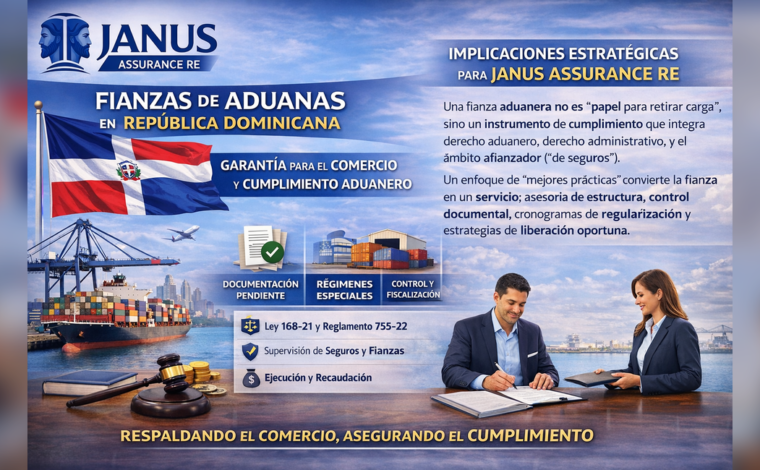
Janus Assurance Re offers fidelity bond and commercial crime coverage as a direct writer, underwritten in-house and administered in the Western Hemisphere through its exclusive managing general agent, Surety One, Inc. This essay explains what the coverage does, how the insuring agreements operate, where the coverage disputes have historically arisen, and how the Janus Assurance Re program is structured.
Fidelity Bond or Commercial Crime Policy: Terminology and Form
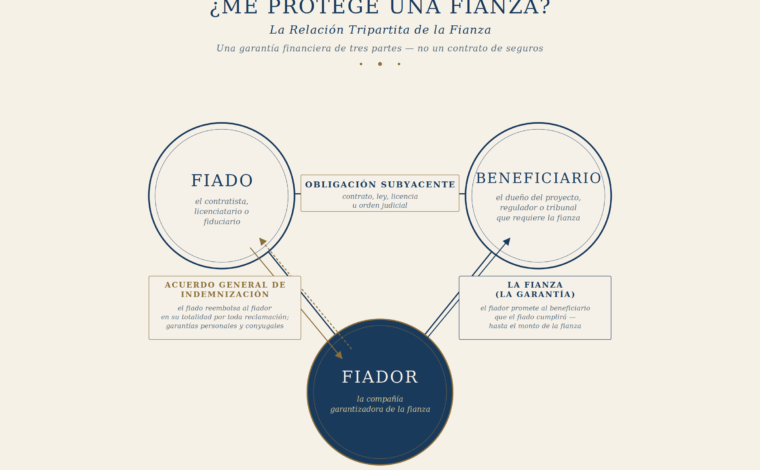
The terms “fidelity bond” and “commercial crime policy” are frequently used interchangeably, and in practice the distinction is largely historical. A fidelity bond in its original form was a surety instrument: a three-party obligation in which a surety guaranteed the honesty of a named employee to the employer. The modern product is a two-party first-party insurance contract, written on forms such as the Insurance Services Office Commercial Crime Coverage Form (ISO 2013) or the Surety & Fidelity Association of America’s Crime Protection Policy. The employee dishonesty insuring agreement within that form is the direct descendant of the fidelity bond, and the industry continues to describe the coverage by that name, particularly where a statute or contract requires the insured to “carry a fidelity bond.”
Coverage is available on either a discovery form or a loss sustained form. A discovery form responds to loss discovered during the policy period regardless of when the act occurred, subject to the retroactive or prior coverage provisions. A loss sustained form responds only to loss that both occurred and was discovered within the policy period or an extended discovery window. The choice matters when an insured changes carriers, and it is a principal reason that a competent underwriter reviews prior coverage before binding a replacement fidelity bond. A gap between a lapsed loss sustained policy and a new discovery policy can leave a long-running embezzlement uninsured.
The Insuring Agreements
A commercial crime policy is modular. Each insuring agreement carries its own limit and deductible, and the insured selects which agreements to purchase. The Janus Assurance Re fidelity bond program makes the following agreements available, individually or in combination.
- Employee theft. The core fidelity coverage. It indemnifies the insured for loss of money, securities and other property resulting directly from theft committed by an employee, whether acting alone or in collusion with others. “Employee” is a defined term that ordinarily extends to leased and temporary workers, certain volunteers and, by endorsement, noncompensated officers and directors.
- Forgery or alteration. Coverage for loss resulting from the forgery or alteration of checks, drafts, promissory notes and similar written instruments drawn against the insured’s accounts. This agreement also typically pays the insured’s legal defense costs where the insured is sued for refusing to honor a forged instrument.
- Inside the premises: theft of money and securities. Coverage for theft, disappearance or destruction of money and securities inside the insured’s premises or a banking premises.
- Inside the premises: robbery or safe burglary of other property. Coverage for loss of property other than money and securities caused by actual or attempted robbery of a custodian, or safe burglary, inside the premises.
- Outside the premises. Coverage for money, securities and other property while in the care of a messenger or an armored motor vehicle company.
- Computer fraud. Coverage for loss resulting directly from the use of a computer to fraudulently cause a transfer of money, securities or other property from inside the premises or banking premises to a person or place outside.
- Funds transfer fraud. Coverage for loss of funds resulting directly from a fraudulent instruction directing a financial institution to transfer, pay or deliver funds from the insured’s account without the insured’s knowledge or consent.
- Money orders and counterfeit currency. Coverage for loss resulting from the good faith acceptance of counterfeit money or worthless money orders in exchange for merchandise, money or services.
- Social engineering fraud (fraudulent impersonation). Offered by endorsement, this agreement addresses the loss that has generated the most litigation in the past decade: the insured’s own employee, deceived by an impostor posing as a vendor, client or executive, voluntarily transfers funds to the fraudster. Because the transfer is authorized by the insured, traditional computer fraud and funds transfer fraud agreements have often been held not to respond. The fraudulent impersonation endorsement closes that gap with an explicit grant, ordinarily subject to a sublimit and a verification condition.
Where Coverage Disputes Arise
The commercial crime policy is a first-party contract, and disputes tend to concentrate on three questions: whether the loss resulted “directly” from the covered act, whether the wrongdoer was an “employee,” and whether a voluntary but deceived transfer is a covered “fraudulent” transfer.
The direct loss question has divided the courts. In Apache Corp. v. Great American Insurance Co., the Fifth Circuit held that a loss arising from a fraudulent change of vendor banking instructions, communicated by email and then implemented through the insured’s own accounts payable process, was not a loss resulting “directly” from computer use, because human intervention broke the causal chain (Apache 2016). The Second and Sixth Circuits reached the opposite conclusion on comparable facts in Medidata Solutions, Inc. v. Federal Insurance Co. and American Tooling Center, Inc. v. Travelers Casualty & Surety Co., finding that a spoofed email was a use of the computer that proximately caused the transfer (Medidata 2018; American Tooling 2018). The lesson for the insured is that reliance on the computer fraud agreement alone to cover business email compromise is a litigation strategy, not a risk management strategy. The fraudulent impersonation endorsement is the correct instrument, and the Janus Assurance Re fidelity bond program includes it.
The employee definition question arises where the wrongdoer is an independent contractor, a subcontractor’s employee, or a member of a partnership or limited liability company. The standard form excludes partners and members from the definition unless endorsed, and it excludes loss caused by an employee after the insured has knowledge of a prior dishonest act by that employee. The prior dishonesty exclusion is applied strictly. An employer that retains an employee after discovering a theft, however small, has likely forfeited fidelity coverage for that employee’s subsequent acts. The consequence is procedural as well as substantive: the insured must have and follow an internal control regime that surfaces dishonesty and acts on it.
The third question, inventory shortage, is an evidentiary one. Most forms exclude loss whose existence or amount is proved solely by an inventory computation or a profit and loss calculation. An insured that suspects employee theft of stock must be able to tie the loss to specific acts through documentation, surveillance or admission. The exclusion is not a bar to recovery, but it shifts the burden of proof onto the insured’s controls.
Who Needs a Fidelity Bond
A simple answer? Everyone! The exposure is universal, but several classes of insured face a statutory, regulatory or contractual requirement rather than a mere prudential one.
Employee benefit plan fiduciaries in the United States must carry a fidelity bond under Section 412 of the Employee Retirement Income Security Act, in an amount not less than ten percent of plan assets handled, subject to statutory minimums and maximums (29 U.S.C. § 1112). The ERISA bond is a distinct instrument that names the plan as insured, and it should not be confused with the employer’s own commercial crime policy, though the two are frequently written together.
Financial intermediaries, broker-dealers, investment advisers, trust companies and money services businesses are commonly required by regulators or by counterparties to carry fidelity coverage. Nonprofit organizations, homeowner and condominium associations, and municipal entities handling public funds face analogous requirements under state or local law. Government contractors and businesses that hold client funds in escrow or trust are frequently required by contract to carry a fidelity bond naming the client as a loss payee.
Beyond the mandated classes, the insured that most needs a commercial crime policy is the one with concentrated financial authority. A single bookkeeper who reconciles the bank statements, prepares the checks and enters the general ledger is the archetypal embezzlement risk, and the ACFE data confirm that the smallest organizations suffer the largest median losses precisely because they lack segregation of duties (ACFE 2024). For those insureds, the fidelity bond is not an optional endorsement to a package policy. It is the difference between a recoverable loss and a business-ending one.
The Janus Assurance Re Program
Janus Assurance Re is a direct writer domiciled in the Dominican Republic, licensed and supervised under Dominican insurance law, with a book that is concentrated in surety and fidelity. Its underwriting philosophy is a conservative one: the company writes business that it expects to produce no loss, and where the credit or control profile of the account does not support that expectation, it requires security. That discipline is visible in the company’s loss history and in its capital position, which the company maintains without reliance on purchased reinsurance.
The fidelity bond and commercial crime policy program is available to commercial, nonprofit, financial and public sector insureds in the Dominican Republic, throughout the Caribbean basin and in Latin America, and to eligible international accounts through licensed intermediaries where the law of the insured’s jurisdiction requires. Surety One, Inc., the company’s exclusive managing general agent for the Western Hemisphere, handles submission, underwriting review, policy issuance and claims administration from its offices in Raleigh, San Juan and Santo Domingo. Coverage is written in English or Spanish, with policy wording drafted to the standard of the ISO and SFAA forms and adapted to local law where required.
Underwriting is control-driven. The application asks for the insured’s audit practice, the frequency of bank reconciliations, the segregation of duties in the payables function, the dual authorization threshold on outgoing wires, and the callback procedure for changes to vendor payment instructions. An insured with weak controls is not necessarily declined, but it should expect a higher deductible, a sublimit on the fraudulent impersonation agreement, or a condition requiring verification before coverage attaches. An insured with strong controls will find the pricing reflects it.
Limits are structured to the insured’s actual exposure rather than to a formula. The relevant measures are the maximum funds accessible to any single employee, the largest routine wire the insured originates, the value of inventory and negotiable instruments on premises, and, for plan sponsors, the ERISA statutory minimum. Janus Assurance Re will write the ERISA bond alongside the employer’s commercial crime policy so that the two instruments are coordinated at renewal.
Claims
A fidelity bond is judged at claim. The Janus Assurance Re program handles claims through Surety One, Inc. and applies the policy as written: the insured gives notice on discovery, submits a sworn proof of loss within the policy’s stated period, and cooperates in the investigation. The company’s adjusting standard is that a documented loss under a purchased insuring agreement is paid. Where the loss involves an ongoing scheme, the insured is expected to terminate the employee’s access immediately, because the prior dishonesty exclusion will otherwise apply to any further loss.
The company also assists insureds with recovery. Restitution orders, civil judgments against the wrongdoer, and reversals of fraudulent wires all reduce the insured loss, and the policy’s subrogation and recovery provisions allocate those recoveries first to the insured’s deductible and uninsured excess, then to the insurer.
Obtaining Coverage
Submissions for a fidelity bond or commercial crime policy from Janus Assurance Re are handled by Surety One, Inc. Applications, control questionnaires and prior loss runs may be directed to the underwriting desk at (919) 859-5294 in North Carolina, (787) 333-0222 in Puerto Rico, or the general line at (800) 373-2804. Janus Assurance Re may be reached directly at Info@JanusAssuranceRe.com or (849) 570-2800 in Santo Domingo, and additional program information is available at JanusAssuranceRe.com.
The commercial crime policy is not a complex product to purchase, but it is an unforgiving one to purchase incorrectly. The form matters, the endorsements matter, and the insured’s own controls matter most of all. An underwriter who understands the coverage disputes of the past decade will structure a fidelity bond that responds when the loss occurs. That is what Janus Assurance Re offers.
~ C. Constantin Poindexter, MA, JD, CPCU, AFSB, ASLI, ARe, AINS, AIS, CPLP
References
- Association of Certified Fraud Examiners. 2024. Occupational Fraud 2024: A Report to the Nations. Austin, TX: ACFE.
- American Tooling Center, Inc. v. Travelers Casualty & Surety Co. of America, 895 F.3d 455 (6th Cir. 2018).
- Apache Corp. v. Great American Insurance Co., 662 F. App’x 252 (5th Cir. 2016).
- Employee Retirement Income Security Act of 1974, § 412, 29 U.S.C. § 1112.
- Federal Bureau of Investigation, Internet Crime Complaint Center. 2025. Internet Crime Report 2024. Washington, DC: FBI.
- Insurance Services Office. 2013. Commercial Crime Coverage Form (Loss Sustained Form), CR 00 21. Jersey City, NJ: ISO.
- Medidata Solutions, Inc. v. Federal Insurance Co., 729 F. App’x 117 (2d Cir. 2018).
- Surety & Fidelity Association of America. Crime Protection Policy. Washington, DC: SFAA.