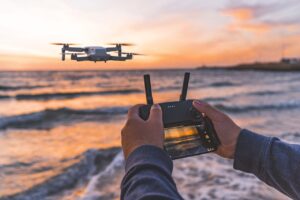
Unmanned aircraft systems have migrated from specialist aviation registries into the ordinary operations of construction firms, surveyors, agricultural enterprises, realtors, and media producers. The insurance programs protecting those businesses have not migrated with them. A growing body of regulatory guidance, standardized policy language, and judicial precedent confirms that commercial drone insurance is a distinct aviation product, not an incidental feature of a general liability program, yet many insureds and their producers continue to assume otherwise. The result is a silent exposure now embedded in commercial portfolios on both sides of the Atlantic, one that specialist underwriters warn most retail brokers have never identified (Garlick 2026).
Drones Are Aircraft as a Matter of Law
The foundational fact is definitional. In the United States, unmanned aircraft are aircraft within the meaning of federal aviation law, and their commercial operation is governed by 14 C.F.R. Part 107, which requires remote pilot certification, registration, and adherence to operational limitations (Federal Aviation Administration 2016). Part 107 does not impose a federal insurance mandate, a fact that lulls many operators into complacency, but the absence of a mandate does not diminish tort liability. It merely leaves the operator to bear that liability personally when no responsive policy exists (Insurance Information Institute, n.d.).
The United Kingdom and the European Union take a stricter position. Regulation (EC) No 785/2004, retained in United Kingdom law following Brexit, makes third-party aviation liability cover compulsory for commercial operators of unmanned aircraft, with minimum limits denominated in special drawing rights and scaled to maximum takeoff mass (European Parliament and Council 2004). A UK business flying a drone commercially without compliant cover is not merely underinsured. It is operating unlawfully (Garlick 2026). Numerous other jurisdictions, including several in Latin America and the Caribbean, where Janus Assurance Re participates as a reinsurer, impose comparable registration and liability regimes through their civil aviation authorities. The direction of global regulation is uniform: unmanned aircraft are aviation risks and are regulated as such.
The Exclusionary Architecture of the Standard Commercial Policy
If regulation supplies the first half of the exposure, standardized policy language supplies the second. The base commercial general liability form has long excluded bodily injury and property damage arising out of the ownership, maintenance, use, or entrustment to others of any aircraft owned or operated by an insured (Insurance Services Office 2012). Courts interpreting that exclusion have held that its purpose is to remove aviation risk from the general liability product entirely, requiring the insured to purchase separate aviation coverage (Essex Insurance Co. v. City of Bakersfield 2007).
Any residual ambiguity as to whether a two-kilogram quadcopter constitutes an “aircraft” was resolved by the Insurance Services Office itself. In June 2015, ISO promulgated endorsements CG 21 09 and CG 21 10, which expressly exclude coverage for injury or damage arising out of unmanned aircraft, together with companion endorsements CG 24 50, CG 24 51, and CG 24 52, which permit carriers to grant limited coverage for scheduled unmanned aircraft or designated operations (Insurance Services Office 2015). A standards organization does not construct a dedicated exclusionary framework for a nonexistent exposure. The architecture exists because the exposure is real, and because carriers intend to underwrite commercial drone insurance separately or not at all.
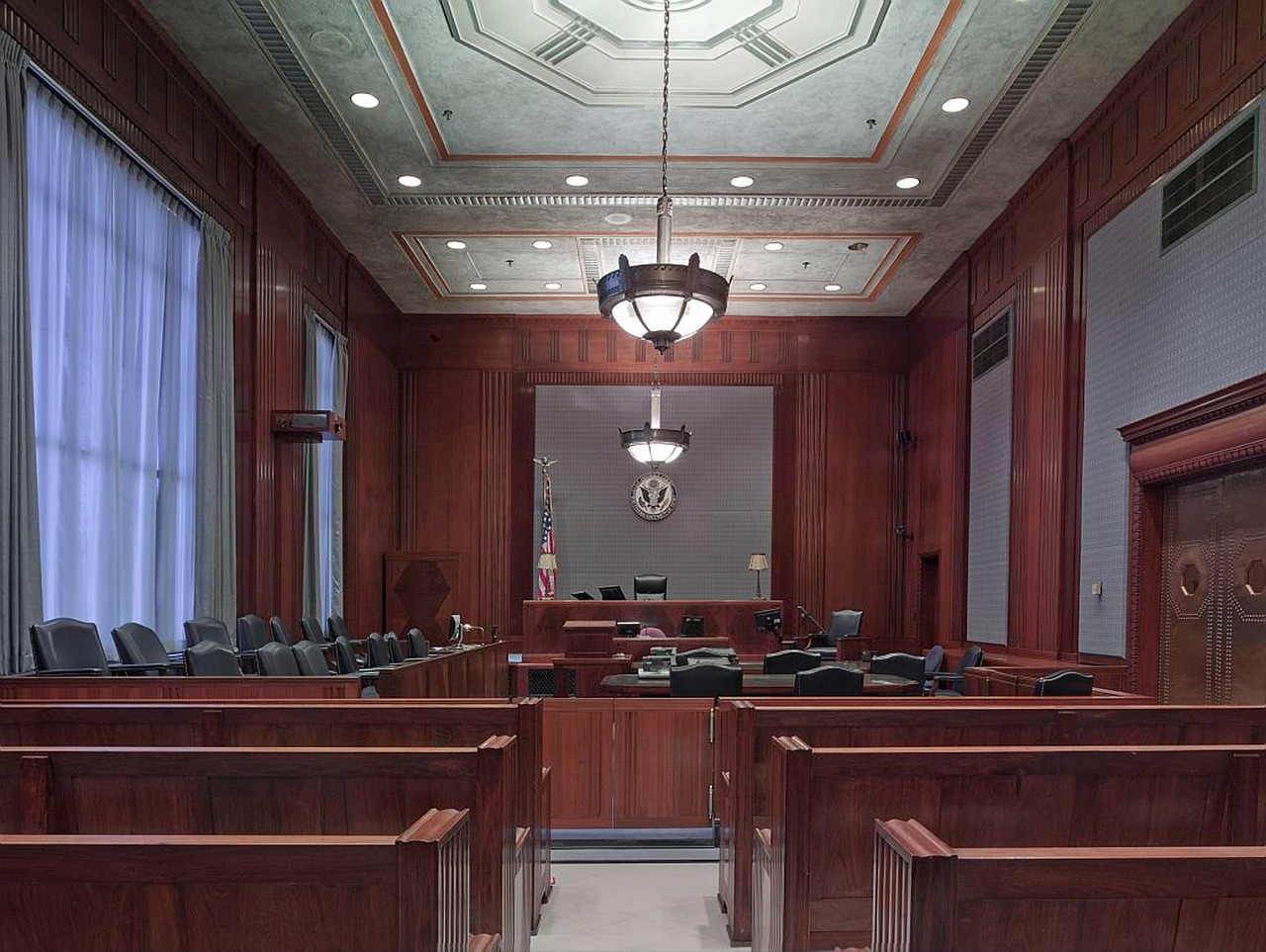
Judicial application has followed. In Philadelphia Indemnity Insurance Co. v. Hollycal Production, Inc., a federal court held that the aircraft exclusion in a commercial policy barred coverage after a drone operated at a wedding struck and blinded a guest in one eye, leaving the photography company to face the claim without insurance (Philadelphia Indemnity Insurance Co. v. Hollycal Production, Inc. 2018). The decision is a concise illustration of the entire problem: a small business, an incidental drone operation, a catastrophic injury, and a general liability policy that responded to none of it.
How the Exposure Enters a Commercial Book
The exposure rarely arrives labeled as aviation risk. It arrives when a chartered surveyor who once carried a notebook and camera begins deploying a drone for roof inspections, or when a general contractor adds progress mapping flights, or when a real estate brokerage starts producing aerial listing photography (Garlick 2026; Commercial UAV News 2026). None of these insureds thinks of itself as an aviation operator, few volunteer the information at renewal, and fewer still have been offered commercial drone insurance by their producer. Specialist underwriters at Coverdrone, a United Kingdom drone facility, told delegates at a British Insurance Brokers’ Association webinar that virtually every retail broker now has unmanned aircraft somewhere in their book, whether they have found it or not (Garlick 2026).
Even where an operator purchases commercial drone insurance, the program is frequently incomplete. Payload, meaning the LiDAR units, thermal imagers, and survey-grade sensors mounted to the airframe, is not automatically covered under hull insurance and must be separately scheduled, despite often exceeding the value of the aircraft itself (Commercial UAV News 2026). Aviation liability policies commonly exclude operations over crowds, night flights without waivers, and flights beyond visual line of sight absent specific endorsement (SkyWatch 2026). Contract-driven work introduces further friction: construction, utility, and government clients typically demand specified limits, additional insured status, and waivers of subrogation that minimal application-based products cannot deliver (Commercial UAV News 2026). Finally, the data dimension of unmanned operations generates privacy and personal injury exposures that neither a general liability form nor a basic hull and liability placement addresses (Insurance Journal 2021).
The View from the Reinsurance Layer
For ceding companies and their reinsurers, the concern is aggregation. When commercial drone insurance is not purchased as a distinct product, the exposure does not disappear. It sits latently across general liability, commercial property, inland marine, and professional liability books, where it has been neither identified, priced, nor accumulated. Silent aviation exposure of this kind is structurally analogous to the silent cyber problem that the market spent a decade remediating: a peril distributed invisibly across nonspecialist lines until claims and coverage litigation forced affirmative treatment. Prudent portfolio management argues for the same remedy here, namely affirmative exclusion on non-aviation forms, affirmative underwriting on dedicated forms, and explicit treaty language addressing unmanned aircraft in both directions.
The trajectory of the risk reinforces the urgency. Heavy-lift platforms are beginning to substitute for cranes, autonomous and remotely piloted systems are expanding into inspection and delivery work, and regulators are actively consulting on routine operations beyond visual line of sight (Garlick 2026). Each development moves unmanned aviation further into mainstream commercial activity and further into commercial books that were never underwritten to contain it.
The proposition that standard commercial policies exclude unmanned aircraft risk is not a marketing thesis. It is the documented position of the standardized forms, the courts that construe them, and the regulators that govern the aircraft themselves. The professional obligation this creates is equally clear. Producers should ask every commercial insured whether it operates or hires drones, in the same breath as questions about vehicles and employees. Insureds should verify whether CG 21 09 or its equivalent sits on their program and respond accordingly. And carriers ceding portfolios that may contain latent unmanned aircraft exposure should address it explicitly rather than discover it in a loss bordereau. Commercial drone insurance exists as a product precisely because no other part of the program will respond. Janus Assurance Re offers reinsurance capacity for unmanned aircraft liability and physical damage programs and welcomes inquiries from ceding companies seeking to write this class affirmatively and profitably.
~ C. Constantin Poindexter Salcedo, MA, JD, CPCU, AFSB, ASLI, ARe, AINS, AIS, CPLP
Bibliography
- Commercial UAV News. 2026. “The Drone Insurance Gaps That Leave Commercial Operators Exposed.” Commercial UAV News, April 7, 2026. https://www.commercialuavnews.com/commercial-drone-insurance-gaps-operators-miss.
- Essex Insurance Co. v. City of Bakersfield, 154 Cal. App. 4th 696 (Cal. Ct. App. 2007).
- European Parliament and Council. 2004. Regulation (EC) No 785/2004 of 21 April 2004 on Insurance Requirements for Air Carriers and Aircraft Operators. Official Journal of the European Union L 138.
- Federal Aviation Administration. 2016. Operation and Certification of Small Unmanned Aircraft Systems, 14 C.F.R. Part 107. Washington, DC: U.S. Department of Transportation.
- Garlick, Bryony. 2026. “The Drone Exposure Hiding in Commercial Insurance Portfolios.” Insurance Business UK, July 1, 2026. https://www.insurancebusinessmag.com/uk/news/breaking-news/the-drone-exposure-hiding-in-commercial-insurance-portfolios-580921.aspx.
- Insurance Information Institute. n.d. “Drones and Insurance.” Accessed July 1, 2026. https://www.iii.org/article/drones-and-insurance.
- Insurance Journal. 2021. “Insuring Commercial Drones: Liability or Opportunity?” Insurance Journal, September 6, 2021. https://www.insurancejournal.com/magazines/mag-features/2021/09/06/630181.htm.
- Insurance Services Office. 2012. Commercial General Liability Coverage Form CG 00 01. Jersey City, NJ: ISO.
- Insurance Services Office. 2015. Exclusion of Unmanned Aircraft, Endorsements CG 21 09 and CG 21 10; Limited Coverage for Designated Unmanned Aircraft, Endorsements CG 24 50, CG 24 51, and CG 24 52. Jersey City, NJ: ISO.
- Philadelphia Indemnity Insurance Co. v. Hollycal Production, Inc., No. 5:18-cv-00768 (C.D. Cal. December 7, 2018).
- SkyWatch. 2026. “Drone Insurance Exclusions That Can Leave You Exposed on the Job.” SkyWatch Blog, April 6, 2026. https://www.skywatch.ai/blog/drone-insurance-exclusions-commercial-operators.