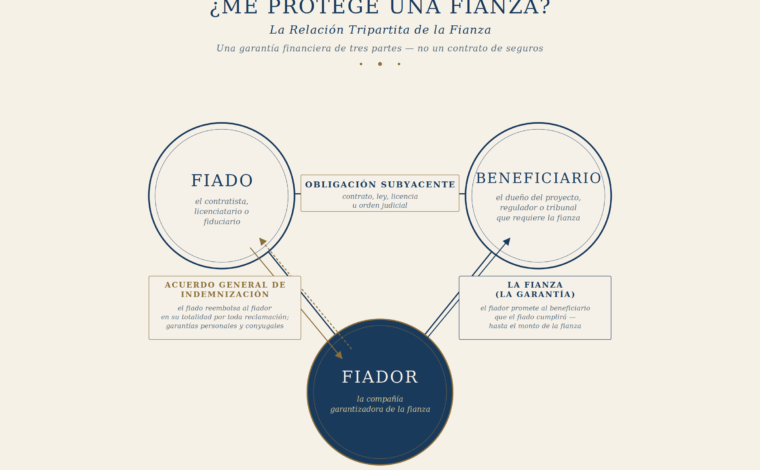
The absence of a REALLY complete online reference for contract surety has been a long-standing gap in the practicing parties’ toolkit. For decades, the contractor asking a first-order question about federal bonding, i.e., the statutory frameworks, the forms, the “T-list”, the ninety-day notice, the effect of retention on the payment bond, etc., has been forced to choose between two unsatisfactory sources. On one side sits the marketing website of the volume broker, offering a bond calculator and little else. On the other side, the SFAA circulars and the national and state surety producers’ associations’ annotated forms, authoritative but pay-walled and paced for the professional underwriter. The construction CPA advising a small general contractor on prequalification, the attorney sorting through contract obligations, the boutique construction lawyer preparing a first Miller Act complaint, . . . all have been underserved by what is available for free on the open web. Well, we now have the Learning Center. We offer a breadth and depth of all things “contract surety bond” that you won’t find elsewhere.
The launch this month of PerformanceBond.com, a property of Janus Assurance Re operated by Surety One, Inc. as managing general agency, is intended to close that gap. The site is a reference-first resource organized around the statutory, regulatory, and procedural architecture of contract surety bonds in the United States, its territories, and for the specialty categories, the San Juan practice touches the Dominican Republic and Caribbean. It is authored, not aggregated. Every substantive page is a signed piece over my byline, with the credentials that ought to matter to a reader evaluating the reliability of what they are reading, i.e., three decades of surety underwriting experience, JD, MA and the CPCU, AFSB, ARe, ASLI, AIS, and AINS designations from The Institutes.
What is on the site
The catalog opens with the six core contract surety bond instruments — performance, payment, bid, subdivision, commercial contract, and site-work and encroachment bonds — each treated at length. The treatment is not encyclopedic; it is practitioner-oriented. The performance bond page walks the AIA A312 architecture and the surety’s declaration and completion options. The payment bond page carries the claimant hierarchy from Clifford F. MacEvoy Co. v. United States through J.W. Bateson Co. v. United States ex rel. Board of Trustees, with the sub-subcontractor exclusion and the ninety-day notice and one-year limitations laid out in the sequence a practitioner needs when a claim first comes in the door. The bid bond page covers SF 24, the twenty percent federal ceiling, and the specific circumstances in which the government has enforced forfeiture rather than pursued difference-in-price recovery.
Two topic clusters extend the catalog into the areas where the current volume is concentrated.
The federal construction contracting cluster is a six-page treatment anchored by a hub page on the Miller Act (40 U.S.C. §§ 3131-3134). The hub carries the full statute-through-claim architecture — thresholds, T-list mechanics under Treasury Circular 570, the Standard Forms 25 and 25A, the payment bond claimant tiers and their protection under section 3133, and the Little Miller Act state analogs from California’s Public Contract Code through New York’s State Finance Law and Illinois’s Public Construction Bond Act. Five spokes then treat the federal contracting environments where our practice sees the highest volume: the SBA 8(a) Business Development Program and its Surety Bond Guarantee mechanics up to the $14 million federal ceiling; the U.S. Army Corps of Engineers portfolio spanning MILCON, civil works, dredging and marine, and environmental restoration; the Department of Veterans Affairs construction procured through the Office of Construction and Facilities Management and the Vets First set-aside framework under 38 U.S.C. § 8127; the General Services Administration Public Buildings Service and its two-phase design-build methodology under FAR 36.3; and the HUBZone contractor program under 15 U.S.C. § 657a with its interplay with the other SBA certifications.
The renewable energy cluster treats the surety instruments now standard across utility-scale solar, wind, hydroelectric, and battery energy storage projects. The hub page presents the full lifecycle — from FERC interconnection deposits through EPC construction through operations under a power purchase agreement through decommissioning at end of life. Five spokes go deep on each instrument. The FERC interconnection bond page carries the surety-authorization language from Order No. 2023-A of March 21, 2024, which for the first time expressly authorized surety bonds as an acceptable form of financial security for commercial readiness deposits and study deposits in the generator interconnection process — a development whose practical effect across MISO, PJM, CAISO, SPP, NYISO, and ISO-NE is only now beginning to be understood by the developer bar. The decommissioning bond page carries the twenty-eight-state statutory registry for utility-scale solar and wind and the Bureau of Land Management’s per-acre and per-turbine posting requirements for federal land.
Reference material rounds out the site. A dedicated Statement of Bondability page explains the pre-award instrument’s proper use and its increasing acceptance by public and private obligees as prequalification evidence. A Learning Center organizes the substantive pages by topical cluster for the reader who wants to work through the material systematically.
Adjacent classes and cross-property routing
Not every reader who arrives searching “performance bond” is looking for a construction performance bond in the Miller Act sense. Some are looking for the reclamation performance bond posted under a state SMCRA-approved coal program. Some are looking for the plugging and abandonment bond required by a state oil and gas conservation commission. Some are looking for the CERCLA financial responsibility instrument posted for a Superfund site. These are distinct classes of financial guarantee bonds, governed not by the Miller Act and the Federal Acquisition Regulation but by 30 CFR Part 800, 40 CFR Part 264 Subpart H, various state statutes, and a patchwork of federal and state environmental frameworks. They are written by Surety One, Inc. as MGA at a sister property, ReclamationBonds.com, and PerformanceBond.com routes explicitly to that specialist site rather than pretending to a specialty it does not maintain. The framework distinction is worth belaboring because misrouting a reclamation or plugging inquiry to a construction surety, or vice versa, wastes hours of practitioner time on both sides.
Who this is for
Contractors preparing federal or state prime bids should find the Miller Act treatment and the federal spoke pages a serviceable substitute for the internal underwriter conversation. The material is written to allow a contractor’s project executive to arrive at the submission meeting already knowing the framework, so that time is spent on the account-specific questions rather than the definitional ones.
Construction CPAs supporting bond programs — a practice that has grown considerably as the accounting firms have consolidated the surety-support advisory work formerly performed inside the sureties themselves — should find the working-capital, net-worth, and personal-indemnity treatment useful as a client-facing reference. Content on the interpretation of work-in-progress schedules from an underwriter’s perspective is on the near-term editorial calendar.
Construction attorneys — including the estate practitioner sorting through a decedent’s contract obligations, the boutique construction lawyer preparing a Miller Act complaint, and the corporate counsel evaluating a contract surety bond form’s manuscripted language, should find the site’s citation architecture serviceable for first-order questions. Every substantive claim is anchored to a statute, a regulation, or a case, and the primary sources link directly to Cornell Legal Information Institute, the electronic CFR at eCFR.gov, and the Federal Acquisition Regulation at acquisition.gov.
Renewable energy project finance teams, whose treatment of surety in project finance memoranda has ranged from perfunctory to actively wrong for as long as the market has existed, should find the renewable energy cluster substantially more useful than the surety chapter of the standard project finance treatises, none of which post-date FERC Order 2023 and its rehearing.
Continuing commitment
The site is not a static publication. Extension of the substantive treatment is planned: an AIA A312 walkthrough, section by section; a treatment of personal indemnity and its release; working-capital and net-worth benchmarks by construction class; a reader’s guide to a work-in-progress schedule as a surety underwriter reads it; and continuing case-note commentary on newly published surety decisions in the appellate courts and the Federal Circuit. Practitioners with specific requests for topical coverage are invited to send them to underwriting@suretyone.com; the editorial calendar takes reader suggestions seriously.
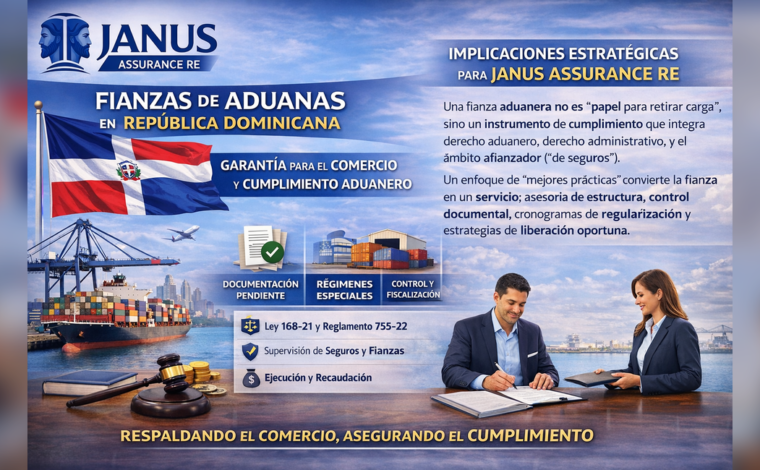
The San Juan office maintains Spanish-language underwriting capability, and a Spanish-language subdomain is on the near-term roadmap for the Latin American practice, alongside comparable reference material at the sister sites fianzasaduanales.com and janusassurancere.com directly.
Substantial portions of the site’s editorial substance draw on my treatment of the same topics in The Contractor’s Guide to Surety Bonds (ISBN 979-8-31781-182-2), published this year by NewSouth Books. The book is available in hardcover and Kindle through Amazon, Barnes & Noble, and directly from the publisher. The site is intended to complement the book rather than to reproduce it. The site treats the operational and current-events dimensions of contract surety in ways print cannot, and the book treats the doctrinal and analytical dimensions in ways a web page cannot. The site is at https://PerformanceBond.com. Direct inquiries reach my desk at (800) 373-2804 or underwriting@suretyone.com. Comments and constructive criticism from the practitioner community are welcomed. A reference is only useful if it is accurate, and a small correction pointed out promptly is worth more than any citation of external authority.
~ C. Constantin Poindexter Salcedo, MA, JD, CPCU, AFSB, ASLI, ARe, AINS, AIS, CPLP