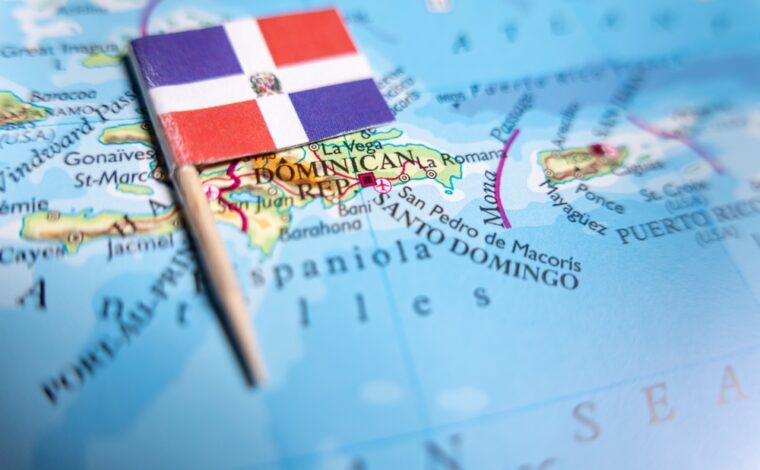

Every practitioner who litigates in the British Virgin Islands, the Cayman Islands, Bermuda, the Bahamas, the Dominican Republic, or the commercial courts of Central and South America eventually confronts the same procedural wall. A court orders security. It may be security for costs against a foreign plaintiff, a bond to stay execution of a judgment pending appeal, counter security as the price of a freezing order or attachment, or a guarantee to release property seized under a conservatory measure. The order is routine. Satisfying it is not. Outside the handful of headline fund disputes, offshore litigation bonds occupy a segment that the large international sureties decline, that local banks price as though they were lending unsecured, and that clients frequently end up funding with cash deposited into court, where it earns nothing and remains frozen for the life of the proceeding. This essay explains what these instruments are, why the working commercial segment is so poorly served, how the principal offshore jurisdictions treat surety in lieu of cash, and how a collateralized guarantor such as Janus Assurance Re fills the gap.
What Offshore Litigation Bonds Actually Secure
The term covers a family of court-related guarantees that share one feature: a tribunal, rather than a commercial counterparty, is the ultimate beneficiary of the obligation. The most common categories are the following.
Security for costs. Common law jurisdictions across the Caribbean permit a defendant to apply for an order that a plaintiff, particularly one resident outside the jurisdiction or a corporate plaintiff of doubtful solvency, post security for the defendant’s costs. The Eastern Caribbean Supreme Court Civil Procedure Rules, which govern the BVI and eight other member states, address the application in Part 24 (Eastern Caribbean Supreme Court 2000). The Grand Court Rules of the Cayman Islands preserve the English tradition of Order 23 (Cayman Islands Grand Court 1995), and Bermuda’s Rules of the Supreme Court do the same (Bermuda Supreme Court 1985). The civil law counterpart is the cautio judicatum solvi, the ancient requirement that a foreign or transient plaintiff post a bond before the court will hear the claim. The Dominican Republic inherited the concept directly from the Napoleonic codes, and it survives in the Civil Code and the Code of Civil Procedure as the fianza del extranjero transeúnte (República Dominicana 1884).
Appeal and supersedeas bonds. A judgment debtor who wishes to appeal without suffering execution in the interim must ordinarily post security equal to the judgment, and often the judgment plus interest and costs. In the Dominican Republic, the interplay between provisional execution and the appellate stay is governed by Law 834 of 1978, which reformed the Code of Civil Procedure and gave the courts explicit authority to condition provisional execution on the provision of a guarantee (República Dominicana 1978). Similar mechanisms exist throughout the region under different names: fianza de apelación, garantía de ejecución provisional, stay of execution pending appeal.
Attachment, freezing order and counter security bonds. A party who obtains a conservatory attachment, a Mareva or freezing injunction, or a ship arrest is routinely required to give an undertaking in damages, and courts across the offshore world increasingly require that undertaking to be fortified by a bond or bank guarantee when the applicant is foreign or thinly capitalized. Conversely, the respondent who wishes to release attached property, whether a bank account, a vessel, real estate or a block of shares, does so by substituting a guarantee for the asset.
Release and discharge bonds. These are the mirror image of attachment bonds. A defendant whose property has been seized offers a surety guarantee to the court so that the asset can be released and put back to productive use while the merits are decided.
What unites these instruments is the amount. The great majority of litigation in the offshore commercial courts is not the billion-dollar fund dispute that makes the legal press. It is the shareholder quarrel over a $600,000 distribution, the yacht arrest for a $250,000 yard bill, the appeal from a $400,000 judgment on a distribution agreement, the security for costs order of $150,000 against a Florida plaintiff suing a BVI company. These are the offshore litigation bonds that matter to working counsel, and they are the ones that are hardest to obtain.
Why the Working Commercial Segment Is Underserved
The economics of the large surety carriers work against small offshore tickets. A multinational surety underwriting a $30 million appeal bond in Delaware can afford an in-house review of the judgment, the appeal and the principal’s financial statements. The same carrier cannot justify that process for a $300,000 bond in Tortola, particularly when the carrier is not admitted in the BVI, its claims department has never dealt with the Eastern Caribbean Court of Appeal, and its reinsurance treaty may not respond to obligations to a foreign court. The rational institutional response is to decline, and that is what the market observes.
Local banks treat a bank guarantee as an extension of credit and price it accordingly. A litigant who asks a Cayman or Dominican bank for a $500,000 guarantee in favor of the court will typically be asked to place $500,000 in a blocked account and will then pay an annual fee on top of that. The litigant has achieved nothing that depositing cash directly into court would not have achieved, except to add a bank’s fee to the cost.
The offshore courts themselves have historically been comfortable with only two forms of security: cash paid into court and a guarantee from a bank the registrar recognizes. Surety paper from a carrier the court has not seen before requires an application, a supporting affidavit and, in practice, an educational effort by counsel. Few lawyers have the time, and most clients would rather write the check.
The consequence is a large, recurring, geographically dispersed demand for offshore litigation bonds in ordinary commercial amounts that is met almost entirely by frozen cash. That is an inefficient outcome for litigants, and it represents a genuine opportunity for a guarantor built to serve it.
How Offshore Courts Treat Surety in Lieu of Cash
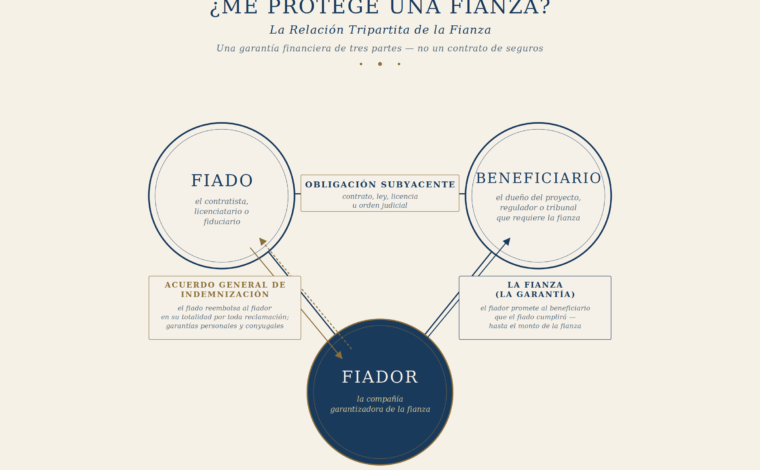
The good news for counsel is that the procedural rules in every major offshore jurisdiction are permissive. Security for costs orders under the Eastern Caribbean rules, the Cayman Grand Court Rules and the Bermuda rules are ordinarily framed in terms of security “in such form as the court may direct” or equivalent language, which leaves the form of the security to judicial discretion (Eastern Caribbean Supreme Court 2000; Cayman Islands Grand Court 1995; Bermuda Supreme Court 1985). The English authorities that the offshore courts follow have long accepted that a guarantee from a reputable financial institution is an acceptable substitute for payment in, provided the instrument is unconditional, payable on demand and governed by a law and forum the court can enforce (Andrews and Millett 2011). Nothing in that reasoning restricts the guarantor to a licensed bank. What the court requires is a solvent obligor, an unconditional promise, and a mechanism for enforcement.
Civil law jurisdictions are, if anything, more accommodating. The Dominican Code of Civil Procedure and Law 834 speak of a fianza or garantía without specifying that the guarantor be a bank, and the Dominican courts have accepted fianzas from insurers and surety companies for decades in customs, judicial and administrative matters (República Dominicana 1978). The same is true of the attachment and provisional execution regimes in Colombia, Panama, Costa Rica and Peru, where surety guarantees issued by an aseguradora or afianzadora are the ordinary means of securing procedural obligations.
The practical requirements that courts and registrars actually impose can be summarized simply. The guarantee must be irrevocable and unconditional. It must be payable on the court’s order or on the beneficiary’s first written demand, without requiring the beneficiary to prove the underlying default. It must state a governing law and submit to the jurisdiction of the issuing court, or at minimum designate an agent for service within the jurisdiction. It must be for a fixed sum and a stated duration, or continuing until discharged by the court. Finally, the guarantor must be able to demonstrate financial capacity to pay, which for a surety means audited financial statements and, where the court requests it, evidence that the specific obligation is collateralized.
A guarantor that understands these requirements and prepares its instrument accordingly encounters little resistance. Counsel who has secured one such order in a jurisdiction will find the second and third far easier.
How a Collateralized Litigation Bond Works for the Litigant
Litigation bonds differ from contract surety in one respect that shapes everything about how they are written. The surety on a performance bond is assessing the principal’s capacity to complete a project. The surety on an appeal bond is assessing nothing of the kind. If the appeal fails, the judgment is affirmed and the surety pays on the court’s order. If the appeal succeeds, the surety is discharged. The outcome is binary and turns entirely on the litigation. The same is true of security for costs and attachment bonds. This is why litigation surety has always been written on a secured basis, and why the classic treatises describe the litigation surety as a compensated guarantor rather than an insurer of the merits (Gallagher 2000).
For the litigant, that structure is the point. Because the surety is not pricing the probability of losing the case, the premium is a fee for the instrument rather than a judgment about the client’s prospects, and the bond can issue on the strength of the security the client provides rather than on a lengthy financial review. Janus Assurance Re writes offshore litigation bonds on precisely this basis. The obligation is secured by collateral held in trust: cash, a standby letter of credit from an acceptable bank, marketable securities with an appropriate haircut, or in suitable cases a pledge of real property. The requirement is proportionate to the amount and the circumstances. A modest security for costs bond for a principal of demonstrated means may be written on indemnity with partial collateral. A large supersedeas bond will be fully secured. Between those points, the requirement scales, and the client is told at the outset exactly what will be needed.
The advantages over cash paid into court are concrete. Marketable securities pledged as collateral continue to earn a return and remain in the client’s name. A standby letter of credit from the client’s existing bank costs a fraction of a full cash block. Real property, which cannot be deposited into court at all, becomes usable as security. The instrument itself is unconditional and payable on the court’s order, so opposing counsel has no basis to object to its form and the court has no reason to prefer cash. And when the litigation ends, the discharge of a surety bond is a simple matter of the court’s order, whereas the release of funds from a registry can take months.
Jurisdictions and Instruments Janus Assurance Re Serves
Janus Assurance Re is a Dominican Republic domiciled surety and reinsurance company with more than fifteen years of operating history and long-standing relationships in the courts and the commercial bar of the Dominican Republic, Puerto Rico, Colombia and the wider Caribbean. Through Surety One, Inc., its exclusive Western Hemisphere managing general agency, the company issues offshore litigation bonds in the following jurisdictions and categories:
- Security for costs bonds in the British Virgin Islands, the Cayman Islands, Bermuda, the Bahamas and the other Eastern Caribbean Supreme Court member states.
- Appeal, supersedeas and stay of execution bonds in the Dominican Republic and throughout Latin America, including bonds required for or against provisional execution.
- Fianzas judicatum solvi and cautio judicatum solvi for foreign plaintiffs in civil law jurisdictions.
- Counter security and fortification of undertakings in damages in support of freezing orders, conservatory attachments and ship arrests.
- Release bonds for attached bank accounts, vessels, shares and real property.
- Cost security in international arbitration seated in the region, where the tribunal or the institution requires it.
Each instrument is drafted to the requirements of the specific court or tribunal, with governing law, submission to jurisdiction and a service agent addressed in the text so that the application to substitute surety for cash proceeds without avoidable delay. Counsel is provided with the company’s financial statements and, where requested, confirmation of the collateral arrangement for the particular bond.
Practical Guidance for Counsel Seeking a Bond
- Identify the precise procedural basis for the security and the form of order the court will enter. A security for costs order under the Eastern Caribbean rules and a fianza under Dominican Law 834 call for differently worded instruments.
- Determine early whether the court has previously accepted surety paper, and if not, prepare a short affidavit describing the guarantor, its financial condition and the collateral behind the bond. Most registrars are receptive once the instrument is unconditional and the guarantor’s capacity is documented.
- Assemble the collateral before applying. A bond cannot issue until the trust is funded, and clients who arrive with a letter of credit already negotiated or securities already identified are bonded in days rather than weeks.
- Finally, address duration. Litigation bonds should be continuing until discharged by the court, not annual, so that the client is never exposed to a lapse in the middle of an appeal.
A Summary
Offshore litigation bonds are not a niche. They are the ordinary security requirements of ordinary commercial disputes in the courts of the Caribbean and Latin America, and they arise every day. The large sureties will not write them, the banks will not write them efficiently, and the result is that litigants freeze capital that could be working for them. A guarantor that understands the procedural rules of the region, accepts the security a client actually has, and drafts an instrument the court will take on first presentation can solve that problem for counsel and clients alike. That is the business Janus Assurance Re was built to write.
Counsel seeking an appeal bond, security for costs, attachment or release bond in any of the jurisdictions above may contact Janus Assurance Re directly or through Surety One, Inc., which manages the company’s underwriting in the United States and its territories.
~ C. Constantin Poindexter, MA, JD, CPCU, AFSB, ASLI, ARe, AINS, AIS, CPLP
References
- Andrews, Geraldine, and Richard Millett. 2011. Law of Guarantees. 6th ed. London: Sweet & Maxwell.
- Bermuda Supreme Court. 1985. Rules of the Supreme Court 1985, Order 23 (Security for Costs). Hamilton: Government of Bermuda.
- Cayman Islands Grand Court. 1995. Grand Court Rules 1995 (as revised), Order 23 (Security for Costs). George Town: Cayman Islands Judicial Administration.
- Eastern Caribbean Supreme Court. 2000. Civil Procedure Rules 2000 (as amended), Part 24 (Security for Costs). Castries: Eastern Caribbean Supreme Court.
- Gallagher, Edward G., ed. 2000. The Law of Suretyship. 2nd ed. Chicago: American Bar Association, Tort and Insurance Practice Section.
- República Dominicana. 1884. Código Civil de la República Dominicana, art. 16, and Código de Procedimiento Civil, art. 166 (fianza judicatum solvi). Santo Domingo.
- República Dominicana. 1978. Ley No. 834 del 15 de julio de 1978, que modifica el Código de Procedimiento Civil (ejecución provisional y garantías). Santo Domingo: Gaceta Oficial.