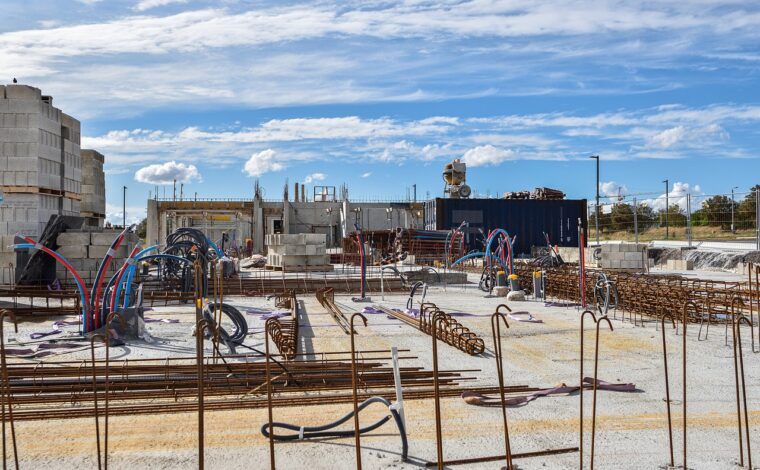

Why Surety’s Record Profits Are Being Paid for in the Reinsurance Layer, and What the Data Center Build-Out Will Do to It. A market that works for everyone except the people carrying the tail
The United States surety market is producing the best sustained underwriting result of any major commercial line, and its reinsurers are not sharing in it. That is the finding of Willis Re’s October market view, Built for cycles: heading into 1/1 2027, and it deserves more than the single news cycle it received. Primary carriers continue to post direct loss ratios that are low by historical standards, while excess of loss reinsurers have absorbed the large contractor and project defaults of the past decade because retentions, though raised, have not kept pace with the size of the losses breaking through them (Willis Re 2026; Recamara 2026a). The broker expects that disconnect to persist while megaprojects, data centers above all, concentrate jumbo bond limits on a small number of contractors.
I run a reinsurer. I will say plainly what the broker said diplomatically: surety reinsurance has drifted into a structure in which the cedent keeps the attritional profit and cedes the severity, at prices and retentions set in an era when a nine figure contractor failure was a once a decade event. That is not reinsurance. It is a volatility dump with a ceding commission attached. The argument of this essay is that the arrangement is unstable, that the data center build-out will test it at a scale the market has never aggregated, and that the correction will come through underwriting discipline at the treaty level rather than through price alone.
The asymmetry in the numbers
The primary side of the ledger is not in dispute. AM Best reports that surety writers produced net profit margins above 30 percent in every year from 2014 through 2024, outperforming every other major commercial line, and that the direct incurred loss ratio fell by more than four points through the third quarter of 2025 against the prior year while premium rose close to 10 percent (AM Best 2026). The Surety & Fidelity Association of America’s all writer direct loss ratio for the first quarter of 2025 was 20.8 percent on $2.86bn of direct written premium (SFAA 2025). Those are the figures a cedent brings to the renewal table.
The reinsurer’s experience of the same book is different in kind, not merely in degree. A surety reinsurance treaty written on an excess of loss basis sees none of the attritional profit and all of the severity above the retention, so a book that runs at 20 percent on a direct basis can run at several multiples of that in the ceded layer if two or three principals fail in the same treaty year. Willis Re’s observation that large loss history, aggregation by principal and the quality of exposure data will matter more at 1/1 than headline loss ratios is a polite way of saying that the direct loss ratio has stopped being a useful signal of what the reinsurer is being asked to carry (Recamara 2026a).
Nor is abundant capacity the same as abundant appetite. Dedicated reinsurance capital reached a record $688bn in the first half of 2026 (Gallagher Re 2026), and Willis Re counts Ageas Re, Silverflame Re, Oak Re, QBE Re, Aurinko Re and Conduit Re among recent entrants to the class with no exits in 2025 or 2026. The same report is explicit that the resulting softening reflects the supply of capital rather than any improvement in loss experience, and that pricing relief will be confined to clean portfolios (Willis Re 2026). Capital chasing a class is not evidence that the class is correctly priced.
Why retentions stopped doing their job
A retention is not a number. It is the cedent’s share of the pain, and it only disciplines underwriting if it is large relative to the losses that actually occur. Retentions in surety reinsurance have risen in nominal terms, but bond limits on the largest contracts have risen faster. PartnerRe notes that while the head contract on a hyperscale project is rarely bonded, the scale and complexity of these projects are driving larger bond sizes throughout the contractor chain, particularly on electrical scopes, with multiple bonds often tied to a single project or sponsor group (Shaw 2026). A retention sized for a $50mn contractor program is a rounding error on a specialty electrical subcontractor carrying $400mn of bonded work across three campuses.
The result is that the cedent’s economic exposure to its own largest principals has fallen as a proportion of the limit, which is exactly the condition under which the academic literature predicts a reinsurer will be adversely selected against. Doherty and Smetters (2005) model reinsurance as a multiperiod principal agent relationship and show that where the reinsurer cannot cheaply monitor the cedent’s underwriting, it must rely on loss sensitive pricing and insurer risk retention to control moral hazard. Jean-Baptiste and Santomero (2000) reach a complementary conclusion: under asymmetric information, the efficient contract relies on loss contingent commissions and long term implicit relationships so that new information about the cedent’s book is priced in over time. Flat ceding commissions on quota shares, and excess of loss layers that attach below the cedent’s true appetite, are the opposite of what both papers recommend. The market built the wrong contract for the risk it now carries.
Pine Gate is the template, not the anomaly
Pine Gate Renewables filed for Chapter 11 in the Southern District of Texas on November 6, 2025. According to the debtors’ own court filings, the bankruptcy affected approximately $1.85bn in outstanding surety bonds and surety backed letters of credit, and that figure excludes exposure associated with the 761 affiliated entities that did not file (Tibbets 2026; In re Pine Gate Renewables 2025). A single developer, bonded across several sureties, produced a loss event larger than the entire industry’s direct losses incurred in a typical quarter.
What should trouble a surety reinsurance underwriter is not the size of the loss but how visible it was. Moody’s analysis shows that the probability of default for Blue Ridge Power, the Pine Gate subsidiary where stress first appeared, crossed its peer group trigger in April 2022 and that its early warning signal moved from High to Severe in September 2025, two months before the filing. By November the subsidiary’s default probability stood at roughly three and a half times its peer benchmark (Tibbets 2026). The signal was in the trade payment data for more than three years. It was not in the audited financial statements that surety underwriters rely on, and it was certainly not in the bordereau the reinsurer received.
The lesson is uncomfortable for both sides of the treaty. The cedent that bonded Pine Gate was underwriting a build and own developer with long dated assets and short dated liquidity as though it were a contractor, and the reinsurer that followed was pricing a layer it could not see into. First Brands tells the same story in trade credit: a base case of $300mn to $600mn in insured losses, an adverse case above $1bn, a Chapter 7 conversion in September 2026, and a trade financier, Raistone, liquidated in its wake (Morningstar DBRS 2025; Octus 2026). Willis Re is right that fraud and double pledging are a due diligence problem before they are a credit problem. The reinsurer’s due diligence is the cedent’s underwriting file, and that file was thin.
Data centers: the exposure nobody can see through
Alphabet, Amazon, Meta and Microsoft have guided to more than $700bn of combined capital spending in 2026, and Willis Re’s James Loggie calls data centers the exposure question of the decade for the credit, surety and political risk market (Willis Re 2026). The hyperscalers themselves are strong credits. The obligor on the bond frequently is not. Much of the build-out is financed through bankruptcy remote special purpose vehicles: the SPV raises debt, builds or acquires the facility, and leases it back to the technology company on completion, with the lease as the only link between the project and the balance sheet that matters (Quinn Emanuel 2026). The Baldwin Group puts the volume moved into such vehicles at well over $120bn, with data center debt issuance nearly doubling in 2025 (Baldwin Group 2026).
For a surety reinsurance underwriter this creates three problems at once. First, the obligee and the sponsor are different entities, so the question of who pays the contractor if the tenant walks is answered in a lease and a guarantee the reinsurer has never read; Meta’s Hyperion vehicle, for example, carries a guarantee of up to $28bn that exists in the bond documents, not the bond form (Quinn Emanuel 2026). Second, the pool of electrical, mechanical and HVAC contractors capable of executing at hyperscale is small, so the same specialist firms recur across campuses and across cedents, and co-surety arrangements scale that aggregation directly into the reinsurance market (Shaw 2026). Third, one project can sit in the same reinsurer’s credit, surety, property, construction and cyber treaties simultaneously, so the aggregate is larger than any single treaty reveals (Willis Re 2026).
The credit market has already begun to price what the surety market has not. S&P cut Oracle to BBB minus on July 9, 2026, citing a free cash flow deficit that could reach $42bn and the risk of being left holding fifteen to nineteen year leases against customer contracts of five years or less (Kiefer 2026; Ranganathan 2026). CoreWeave’s five year credit default swaps traded above 1,000 basis points in mid October (Willis Re 2026). Neither company has defaulted on a data center obligation. Both are the credit behind thousands of bonded subcontracts, and a cedent that cannot tell its reinsurer which campuses, which sponsors and which SPVs stand behind its ten largest principals does not have an aggregation problem. It has an underwriting problem that it has delegated upward.
What a rational reinsurer does next
The principal agent model has a clear prediction for a surety reinsurance market in this condition. When the loss distribution migrates into the tail and the reinsurer’s information disadvantage widens, price controls alone stop working and the reinsurer substitutes monitoring: it demands information, it conditions terms on that information, and it lets the relationship, not the annual rate, carry the adjustment (Doherty and Smetters 2005). That is precisely what Willis Re describes for 1/1 2027. Reinsurers will keep supporting the class, particularly for multi line clients, but will differentiate harder by cedent, with price increases confined to programs that have had losses and closer scrutiny for anyone with data center, Brazil or stressed sovereign concentration (Willis Re 2026; Recamara 2026b).
The macro backdrop removes any argument for patience. The ten year Treasury closed at 5.31 percent on October 5, the highest close of the year (U.S. Department of the Treasury 2026). Coface revised its 2026 forecast in June to an 8 percent rise in United States insolvencies, double its January estimate, after North American failures rose 22 percent in the first months of the year (Coface 2026). Construction is among the sectors it names. A contractor book written against a 4 percent Treasury and a flat insolvency curve is not the book the reinsurer is renewing.
What Janus Assurance Re asks for, and why it is not hostility
Janus Assurance Re will go into 1/1 asking every surety cedent for three things, and we will price the absence of any of them. We want exposure by principal, not by bond, i.e., the aggregate bonded limit on each of the cedent’s twenty largest contractors across all programs, with co-surety shares identified. We want the sponsor behind every bonded data center, renewable and megaproject scope, down to the SPV and the lease or guarantee that funds it, because a hyper-scaler tenant and a hyper-scaler obligor are not the same credit. We want evidence that the cedent’s surveillance looks forward, i.e., payment behavior, trade data and default probability on its large principals, not a twelve month old audited presentation. Moody’s demonstrated that the Pine Gate signal was available three years early (Tibbets 2026). A cedent that did not see it needs to be able to explain itself.
Don’t misinterpret our position as a withdrawal of support. Surety reinsurance is built for cycles, as Willis Re’s title has it, and Janus intends to be in the class through this one. It is a statement that the retention, the ceding commission and the attachment point are underwriting decisions, not administrative ones, and that a reinsurer which cannot see who stands behind the bond is not reinsuring the cedent’s judgment. It is replacing it, and the price that no longer reflects the risk, sucks. The sureties that bring clean aggregation data and a forward looking surveillance file will find fast, flexible on collateral and ‘easy to work with’ solutions with Janus. The ones that bring a twenty percent direct loss ratio and nothing else should expect a very different conversation, . . . probably one that its broker has already warned them about.
Janus Assurance Re is a Dominican domiciled reinsurer of surety, fidelity and credit risks. Surety One, Inc. is its exclusive managing general agent for the western hemisphere.
~ C. Constantin Poindexter, MA, JD, CPCU, AFSB, ASLI, ARe, AINS, AIS, CPLP
References
- AM Best. 2026. “Best’s Special Report: Infrastructure Projects Spur Growth and Help Fuel Profits for U.S. Surety Insurers.” Press release, January 19. https://news.ambest.com/PR/PressContent.aspx?altsrc=2&refnum=36948.
- Baldwin Group. 2026. “2026 Surety and SDI Mid-Year State of the Market.” https://baldwin.com/insights/surety-industry-report/.
- Coface. 2026. “Insolvencies Are on the Rise Again Against a Backdrop of a Deteriorating Economic Climate.” June 11. https://www.coface.com/news-economy-and-insights/insolvencies-are-on-the-rise-again-against-a-backdrop-of-a-deteriorating-economic-climate.
- Doherty, Neil, and Kent Smetters. 2005. “Moral Hazard in Reinsurance Markets.” Journal of Risk and Insurance 72 (3): 375–391. https://doi.org/10.1111/j.1539-6975.2005.00129.x.
- Gallagher Re. 2026. Reinsurance Market Report: First Half 2026. Cited in “Reinsurers Remain Profitable Despite Softer Pricing and Rising Loss Risks,” Beinsure, September 2026. https://beinsure.com/reinsurers-remain-profitable-despite-softer-pricing/.
- In re Pine Gate Renewables, LLC, et al. 2025. Disclosure Statement for First Amended Joint Chapter 11 Plan, Case No. 25-90669 (CML), Bankr. S.D. Tex., Docket No. 1150. https://casedocs.omniagentsolutions.com/cmsvol2/pub_47561/be6cd071-fd92-43da-a2ee-89cf54f998e2_1025.pdf.
- Jean-Baptiste, Eslyn L., and Anthony M. Santomero. 2000. “The Design of Private Reinsurance Contracts.” Journal of Financial Intermediation 9 (3): 274–297. https://doi.org/10.1006/jfin.2000.0291.
- Kiefer, Paul. 2026. “Oracle Credit Rating Drops amid Wisconsin Fight over Data Center Credit Rules.” Wisconsin Watch, July 16. https://wisconsinwatch.org/2026/07/wisconsin-oracle-data-center-credit-rating-drop-rules-fight-tech-energy-ai-utility.
- Morningstar DBRS. 2025. “Trade Credit Insurers Face First Brands ‘Test Case’ with Up to $600 Million Losses.” Reported in The Insurer, October 14. https://www.theinsurer.com/ti/news/morningstar-dbrs-trade-credit-insurers-face-first-brands-test-case-with-up-to-2025-10-14/.
- Octus. 2026. “Filing Alert: First Brands Group’s Third-Party Factor Raistone Files Chapter 7 in the Southern District of New York.” February 23. https://octus.com/resources/articles/filing-alert-first-brands-groups-third-party-factor-raistone-files-chapter-7-in-the-southern-district-of-new-york/.
- Quinn Emanuel Urquhart & Sullivan. 2026. “Emerging Litigation Risks in AI Data Centers.” Client alert. https://www.quinnemanuel.com/media/4dzkfccz/client-alert-ai-data-center-financing-and-litigation-risks.pdf.
- Ranganathan, Vidya. 2026. “Oracle’s Debt Burden Tests Investor Faith in AI Build-Out.” Reuters. https://935thelloyd.com/?p=993832.
- Recamara, Josh. 2026a. “US Surety Reinsurers Absorb Volatility as Primaries Profit: Willis Re.” Insurance Business America, November 1. https://www.insurancebusinessmag.com/us/news/breaking-news/us-surety-reinsurers-absorb-volatility-as-primaries-profit-willis-re-595736.aspx.
- Recamara, Josh. 2026b. “Data Centers Are Credit Market’s Exposure of the Decade: Willis Re.” Insurance Business, November 2. https://www.insurancebusinessmag.com/asia/news/breaking-news/data-centers-are-credit-markets-exposure-of-the-decade-willis-re-595738.aspx.
- SFAA (Surety & Fidelity Association of America). 2025. Quarterly Countrywide Surety Top 100 Writers: Calendar Year 2025, First Quarter. https://mbasurety.com/wp-content/uploads/2025/06/20251Qb-Top-100-Surety-updated.pdf.
- Shaw, Glen. 2026. “Data Centers: A New Driver of Surety Risk.” PartnerRe Perspectives, September 21. https://www.partnerre.com/perspectives/data-centers-a-new-driver-of-surety-risk/.
- Tibbets, Graham. 2026. “How Moody’s Surety Risk Intelligence Framework Signaled Financial Strain at Pine Gate Renewables and Blue Ridge Power.” Moody’s Insights, May 18. https://www.moodys.com/web/en/us/insights/insurance/moodys-surety-risk-intelligence-framework-signaled-financial-strain-at-Pine-Gate-Renewables-Blue-Ridge-Power.html.
- U.S. Department of the Treasury. 2026. Daily Treasury Par Yield Curve Rates, October 2026. https://home.treasury.gov/resource-center/data-chart-center/interest-rates/.
- Willis Re. 2026. Built for Cycles: Heading into 1/1 2027. Credit, Surety and Political Risk Market View, October 30. https://www.willisre.com/news-and-insights/built-for-cycles-heading-into-1-1-2027/.