
The property/casualty intermediary faces a two-sided assault that the industry’s own data has not yet registered, and the surety class is more exposed than its practitioners generally assume. On one side, non-insurance platforms are embedding coverage inside the transactions that create the risk, capturing the customer before an agent is ever consulted. On the other, carriers are applying artificial intelligence to underwriting intake with the explicit aim of writing standardized business without an agency at all. Each vector alone would compress intermediary margins. Together they threaten the economic rationale of the agency and brokerage channel for every risk that can be reduced to data a platform already holds.
My piece here runs general to the particular. It first describes the structural position of the intermediary in U.S. P/C distribution and why that position has looked unassailable. It then examines the two disintermediating vectors and the economics by which they erode commission income even where the broker nominally remains in the transaction. I tie it up by narrowing the analysis to surety, where statutory bonds, application programming interfaces (APIs), and licensing-triggered issuance combine to make the threat concrete rather than speculative. I hope that it is enlightening.
The Intermediary’s Structural Position in Property/Casualty
The statistical case for intermediary permanence is strong, which is precisely why it is dangerous. The Big “I” 2026 Market Share Report, compiled from AM Best data, finds that the independent agency channel placed 62% of all U.S. P/C premium written in 2025, including 87.7% of commercial lines and 39.5% of personal lines, with direct written premium through the channel reaching $1.1 trillion (Independent Insurance Agents & Brokers of America 2026). Across a longer horizon, the share of P/C premium flowing through intermediaries has held almost constant at 57–58% notwithstanding two decades of internet-enabled direct marketing (Falchuk 2026). The direct-to-consumer insurtech wave of the late 2010s largely failed to dislodge the channel and in several cases pivoted to selling through agents (Insurance Business 2026a).
That durability rests on three functions. The intermediary translates an opaque product for a buyer who does not know what to ask; it aggregates demand across carriers so that no single insurer must bear the acquisition cost; and it holds the regulatory license, the audit trail, and in surety the power of attorney that make it the legal point of execution. Roughly 30% of U.S. surety bonds are written on carrier paper but executed entirely outside the carrier’s own system, by the agent (Tinubu 2026). The channel’s defenders cite these functions as proof that disintermediation is structurally improbable (Reinsurance News 2026; Business Insurance 2026).
The error in that reasoning is to treat the functions as inseparable. Each has historically required a human because the data needed to perform it was dispersed, unstructured, and costly to assemble. Embedded platforms and AI-enabled carriers attack that premise directly. Where the platform already holds the data that an agent would otherwise gather, and where the carrier can underwrite from it in seconds, translation and aggregation become software features and the license becomes a line item that a carrier or MGA can supply. The historical market share then describes the past cost of information rather than any enduring value of the intermediary.
The First Vector: Non-Insurance Platforms as Distributors
Embedded insurance is coverage delivered inside another product or service at the moment the risk is created, as opposed to a standalone policy the customer must seek out through an agent, broker, or insurer website (Hexaware 2026). The model is not new; extended warranties and travel coverage have been sold this way for decades. What has changed is that the embedding host is now the vertical software through which a business already operates, so that the platform holds the underwriting data before any insurance question is asked.
The scale projections are unreliable and should be read with suspicion. Deloitte has forecast that embedded distribution could reach $700 billion in gross written premium by 2030, roughly 16% of the global total against 3–4% today (Hexaware 2026). Conning’s more disciplined analysis, confined to U.S. personal lines and standardized small commercial coverage, projects that embedded distribution could exceed $70 billion in premium by 2030 while conceding that multibillion-dollar insurtech investment had not yet shifted business materially (Conning 2023). The conservative figure is the one that matters, because $70 billion of standardized small commercial and personal premium is the independent agency’s base load.
The commercial examples are already operating. Marsh Affinity arranges product liability, business interruption, and workers’ compensation for small and medium enterprises through platform partners, and orchestrates commercial auto and cargo liability for Amazon delivery service partners purchased through Amazon itself; Thimble sells small business coverage through the restaurant software provider Toast (Lease 2026). In each case the broker is present, but as infrastructure behind the platform rather than as the owner of the account. The platform controls the relationship, and the insurer is not the main brand (Hexaware 2026).
The channel conflict this creates inside carriers is instructive. Carrier sales organizations view API partnerships as margin-dilutive, and several major carriers have restricted embedded program access to non-competing product lines (Market Research Future 2026). Carriers are, in other words, already triaging which products still require an agent. Agents themselves recognize the shift: direct-to-consumer and platform competition was cited by 43% of independent agents as the single biggest factor reshaping their channel in 2026, up from 37% a year earlier, in a market that FirstConnect describes as fragmenting among independents, captives, aggregators, embedded partners, and direct writers (Insurance Business 2026a).
The Second Vector: Carriers Applying AI to Write Direct
The second vector runs through the carrier rather than around it. Direct writers such as NEXT Insurance and biBERK already sell business coverage to small firms online with instant quoting and same-day binding, and carriers including Progressive Commercial sell through independent agents and a direct channel simultaneously (Quotesweep 2026). What AI adds is the capacity to underwrite from unstructured data at conversational speed, which removes the last operational reason a standardized commercial account needed a producer to assemble a submission.
The capital markets priced this in before the trade press did. On February 9, 2026, after reports that ChatGPT users could obtain personalized homeowners quotes through an in-chat application, U.S. public brokers as measured by the MarshBerry Broker Composite Index fell 8.9% in a single session (Trem 2026; Sica Fletcher 2026). Three weeks later BofA Global Research estimated that more than $15 billion of U.S. insurance commissions are tied to low-complexity business bearing a material risk of AI disintermediation, and added the less-noticed finding that even complex placements will experience pricing deflation as AI demystifies insurance markets for sophisticated buyers (Fortune 2026). Falchuk’s framing is the sharper one: the disruption is not a friendlier chatbot for people who already know they need insurance, but AI that identifies the need on its own from context it already holds (Falchuk 2026).
The standard rebuttal, that licensing, audit trails, and claims authority limit full automation (Reinsurance News 2026), concedes the point. Those requirements constrain who may execute a transaction; they do not require that a human originate it. A carrier or MGA holding the license can place an AI intake layer in front of its own underwriting and satisfy every regulatory condition without an appointed agent. The brokers’ own chief executives acknowledge disintermediation at the basic end of the market while asserting that complex accounts remain defensible (Business Insurance 2026). That assertion is true and insufficient. The basic end of the market is where most intermediaries earn most of their revenue.
The Economics of Erosion
The two vectors converge on commission. An intermediary’s revenue is a percentage of premium, and both embedded platforms and AI-enabled direct writers reduce it through three distinct mechanisms that operate even when the broker is not formally removed.
The first is substitution: the account is written without an agent and the commission is never paid. The second is reallocation: the broker remains agency of record on a platform program but earns a negotiated program rate on a book it no longer controls, which is a different economic position from owning the same accounts individually. The third is deflation: AI-informed buyers negotiate harder, and program pricing set at platform scale resets the market rate for the product class, so that the broker’s remaining standalone accounts reprice downward (Fortune 2026).
The cyclical timing compounds the structural problem. The Council of Insurance Agents & Brokers reported average commercial premium decreases across all account sizes in both the first and second quarters of 2026, the first such decline since 2017, with second-quarter premiums down 2% overall and commercial property down 6.3% (Council of Insurance Agents & Brokers 2026). A soft market reduces the premium base on which commission is calculated at exactly the moment the channel is losing share of that base. Moody’s expects the softening to push still more business through delegated structures such as broker facilities and MGAs, where pre-agreed underwriting criteria replace risk-by-risk negotiation (Insurance Business 2026b). Delegated authority is itself a form of disintermediation of the producing agent, since the facility, not the producer, holds the carrier relationship.
Now, My Take on the Surety Thing
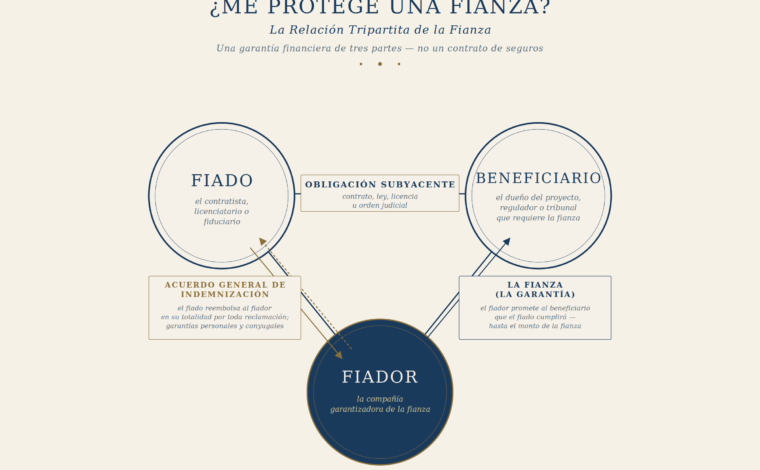
Surety is often described as the line least susceptible to disintermediation because it is a credit product, three-party in structure, and dependent on relationships and judgment. That description fits contract surety for large and mid-sized accounts. It does not describe the volume of the business. The U.S. market is profitable and well capitalized; AM Best maintains a stable outlook supported by strong profitability and public infrastructure investment, while noting that ample capacity will keep it intensely competitive (AM Best 2026). Competition for a stable premium pool is the environment in which carriers look hardest at acquisition cost, and surety commissions are high by P/C standards.
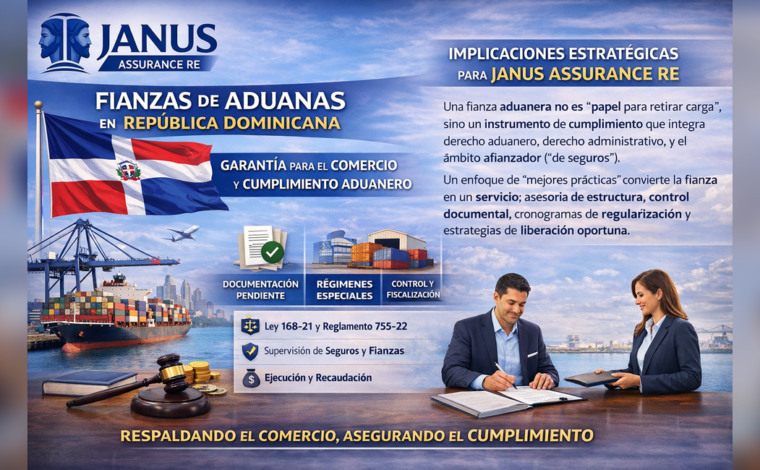
The commercial surety book is unusually embeddable because most of it is statutory, standardized, and triggered by a licensing or onboarding event that already occurs inside a software platform. Merchants Bonding Company has published a field guide for exactly this purpose, defining an embedded surety bond as a statutory bond issued inside a platform’s own onboarding workflow, and identifying a platform as a candidate when it licenses other businesses, that license triggers a bond, the platform already collects the bonding data, and the platform must currently obtain the bond elsewhere (Merchants Bonding Company 2026a). The examples it offers are the backbone of the commercial surety agent’s book: contractor license bonds through business-formation tools, auto dealer bonds through dealer software, and freight broker bonds, which it calls among the cleanest opportunities in the market because the bond is a condition of operating authority (Merchants Bonding Company 2026a). Tariff-driven demand for customs bonds, which WTW describes as unprecedented, moves through freight-forwarding and brokerage platforms that are equally suited to issuance by API (WTW 2025).
The fidelity example is already in production. A national retirement-plan platform now onboards plan sponsors end to end and routes their data automatically to the carrier’s API to issue the ERISA fidelity bond the plan requires; the platform cannot complete onboarding until the bond is obtained, so the bond became part of signing up (Merchants Bonding Company 2026b). The carrier reports that the integration saved the platform an estimated $2.5mn in annual bond premium (Merchants Bonding Company 2026b). That figure is the deflation mechanism in surety form. A platform aggregating thousands of plan sponsors commands program pricing no agency can match, and the agency that formerly wrote those bonds one sponsor at a time has lost both the accounts and the pricing benchmark. The carrier’s assurance that the arrangement preserves continuity for the agency of record describes a reduced role at a reduced rate.
Contract surety is less immediate but not immune. inRev operates an API-first platform that gathers third-party data, evaluates the contractor and the obligation, and returns terms in seconds for bonds up to $5mn single and $10mn aggregate, then auto-populates and distributes indemnity agreements and bonds (National Association of Surety Bond Producers n.d.). The platform is agent-accessed today. Its architecture is one integration away from a construction bidding or project management platform offering bid and performance bonds inside its own workflow, and the SME contractor segment in which it operates is precisely the segment AM Best identifies as exposed to a slowdown in private construction (AM Best 2026). Two further conditions aggravate the exposure. Experienced surety professionals are migrating to newer carriers and brokers, thinning the institutional memory that would otherwise resist a technology-led reset (Lockton 2026), and the expiration of IIJA funding in September 2026 removes the demand tailwind that has masked competitive pressure since 2022 (Construction Equipment Guide 2026).
My Warning
The threat to the P/C intermediary is existential for the standardized majority of its book, and the surety class is not the exception its practitioners believe it to be. The intermediary’s historical market share measured the cost of assembling information, not the value of a human in the chain. Embedded platforms now hold that information at the point of risk creation, and AI-enabled carriers can underwrite from it without a producer. The statutory, licensing-triggered character of commercial surety makes it a first-order candidate for both, and the ERISA fidelity integration demonstrates that the transition is operational, not prospective.
What survives is the complex, relationship-dependent, judgment-intensive placement, together with the intermediary that positions itself as the licensed infrastructure behind a platform rather than the competitor in front of it. For the surety intermediary the strategic question is not whether to resist embedded distribution, which cannot be resisted, but whether to own the facility, the program, or the API relationship through which the standardized book will increasingly flow. The alternative is to remain agency of record on a program whose economics are set elsewhere, until the program no longer needs one, . . . and that day is coming.
~ C. Constantin Poindexter, MA, JD, CPCU, AFSB, ASLI, ARe, AINS, AIS, CPLP
Bibliography
- AM Best. 2026. Market Segment Outlook: US Surety Insurance. Oldwick, NJ: A.M. Best Company, March 27, 2026. Catalog record.
Business Insurance. 2026. “AI Will Drive Efficiencies, Won’t Replace Brokers: CEOs.” Business Insurance. https://www.businessinsurance.com/ai-will-drive-efficiencies-wont-replace-people-ceos/. - Conning. 2023. “Embedded Insurance Distribution Could Exceed $70 Billion in Premium in the U.S. by 2030.” Press release, January 9, 2023. https://www.conning.com/about-us/news/ir-pr—embedded-insurance-distribution.
- Construction Equipment Guide. 2026. “Surety Market Enjoying the Sunshine.” Construction Equipment Guide, February 18, 2026. https://www.constructionequipmentguide.com/surety-market-enjoying-the-sunshine/70473.
- Council of Insurance Agents & Brokers. 2026. Commercial Property/Casualty Market Survey, Q2 2026. Reported in “CIAB Survey: Overall Soft Market Conditions Continue in Q2,” Insurance Journal, August 20, 2026. https://www.insurancejournal.com/news/national/2026/08/20/882240.htm.
- Falchuk, Bryan. 2026. “AI Is Not the Internet.” Carrier Management, August 9, 2026. https://www.carriermanagement.com/features/2026/08/09/290876.htm.
- Fortune. 2026. “$15 Billion of the Insurance Industry Is at Risk from AI, BofA Says.” Fortune, March 3, 2026. https://fortune.com/2026/03/03/15-billion-of-the-insurance-industry-is-at-risk-from-ai-bofa-says.
- Hexaware. 2026. “Embedded Insurance: Why It’s More Than a Distribution Play.” Updated April 10, 2026. https://hexaware.com/blogs/embedded-insurance-why-its-more-than-a-distribution-play/.
- Independent Insurance Agents & Brokers of America. 2026. “Big ‘I’ Releases 2026 Market Share Report.” Press release, June 23, 2026. https://www.independentagent.com/news/big-i-releases-2026-market-share-report/.
- Insurance Business. 2026a. “Independent Agents Face New Challenges Despite Improving Carrier Relationships: FirstConnect Report.” Insurance Business America, June 25, 2026. https://www.insurancebusinessmag.com/us/news/technology/independent-agents-face-new-challenges-despite-improving-carrier-relationships-firstconnect-report-580384.aspx.
- Insurance Business. 2026b. “Brokers Gain Ground as Delegated Underwriting Reshapes the Market.” Insurance Business Asia, September 4, 2026. https://insurancebusinessmag.com/asia/news/breaking-news/brokers-gain-ground-as-delegated-underwriting-reshapes-the-market-588659.aspx.
- Lease, Daryl. 2026. “Silent Partner.” Leader’s Edge, July 14, 2026. https://www.leadersedge.com/industry/silent-partner.
Lockton. 2026. “Contract Surety.” Construction Market Update, February 2026. https://insights.lockton.com/construction/market-update-feb26/contract-surety. - Market Research Future. 2026. Embedded Insurance Market (2026–2035). https://www.marketresearchfuture.com/reports/embedded-insurance-market-24048.
- Merchants Bonding Company. 2026a. “How to Spot Embedded Surety Bond Opportunities: A Field Guide.” https://www.merchantsbonding.com/talk-surety-to-me/how-to-spot-embedded-surety-bond-opportunities-a-field-guide.
- Merchants Bonding Company. 2026b. “Surety Bond API Integration Turns Self-Service Into More Revenue.” https://www.merchantsbonding.com/talk-surety-to-me/surety-bond-api-integration-turns-self-service-into-more-revenue.
- National Association of Surety Bond Producers. n.d. “inRev.” Accessed October 18, 2026. https://www.nasbp.org/inrev.
Quotesweep. 2026. “Direct Writer Insurance.” Agency Operations glossary, updated March 2026. https://www.quotesweep.com/glossary/direct-writer-insurance. - Reinsurance News. 2026. “TD Cowen: AI Likely to Augment Rather Than Replace Insurance Brokers.” Reinsurance News, March 9, 2026. https://www.reinsurancene.ws/td-cowen-ai-likely-to-augment-rather-than-replace-insurance-brokers/.
- Sica Fletcher. 2026. “Insurance Brokers Plunge on AI Fears.” Leader’s Edge, March 24, 2026. https://www.leadersedge.com/industry/insurance-brokers-plunge-on-ai-fears.
- Tinubu. 2026. “The 30% Problem: Why a Third of Your Bonds Live Outside Your System.” Tinubu blog. https://www.tinubu.com/blog/page/6?page=2.
- Trem, Phil. 2026. “Walking the Tightrope.” Leader’s Edge, March 31, 2026. https://www.leadersedge.com/industry/walking-the-tightrope.
- WTW. 2025. Insurance Marketplace Realities 2026 – Surety. October 2, 2025. https://uatredesignp.wtwco.com/en/insights/2025/10/insurance-marketplace-realities-2026-surety.