
LatAm 2026 Credit Conditions and Why Tighter Lending Standards Increase Demand for Surety, Guarantees and Stronger Security Packages
Across Latin America and the Caribbean in 2026, credit is not disappearing so much as it is being repriced, restructured, and rationed. For borrowers, the practical consequence is familiar: fewer lenders willing to take unsecured balance sheet risk, higher emphasis on cash flow resilience, and a growing insistence on hard security, enforceable covenants, and credible risk transfer. For arrangers, sponsors, and project owners, the consequence is equally clear: financial guarantees, surety bonds, and well-designed credit enhancement are becoming less of a financing accessory and more of a financing prerequisite. This is not merely a cyclical tightening. It is a structural reorientation in which lenders and institutional investors demand better visibility, better controls, and better remedies when things go wrong. In that environment, the Dominican Republic and internationally oriented counterparties will see a renewed premium on instruments that convert uncertainty into measurable, contractible obligations, including performance support, payment support, and credit wraps, all executed with disciplined underwriting and a security package that survives stress.
Regional macro conditions set the frame for how credit committees behave. The Inter American Development Bank has projected modest growth for Latin America and the Caribbean in 2026, while highlighting persistent headwinds from high global interest rates, elevated debt burdens, and rising debt service costs, all of which constrain fiscal space and raise risk sensitivity in capital markets (Reuters, 2026). The World Bank’s January 2026 Global Economic Prospects similarly emphasizes that external conditions, financing costs, and policy constraints remain central to the outlook for the region, with growth improving only gradually and risks tied to global uncertainty and trade tensions (World Bank, 2026). The IMF’s Western Hemisphere assessment has also stressed that the disinflation process continues but that the path back to targets can take longer in some jurisdictions, and that public debt dynamics elevate the need for credible fiscal and institutional anchors, which markets translate into pricing, tenor discipline, and covenant tightness (International Monetary Fund, 2025). Even when headline growth is stable, creditors behave more conservatively when rates stay higher for longer, rollover needs persist, and volatility can reappear quickly.
Those macro signals translate directly into micro underwriting. When lenders perceive that the probability distribution of outcomes has widened, they do not merely charge more. They narrow what they will accept. The first area that tightens is leverage tolerance, particularly for borrowers with weaker governance, concentrated revenues, or limited access to hard currency cash flows. The second is documentation. Creditors become far more attentive to negative pledges, leakage controls, and the operational triggers that allow them to intervene before a default becomes irrecoverable. The third is collateral quality. In emerging markets, the enforcement discount can be higher than many sponsors expect, so lenders want security that is not only pledged but also perfected, valued conservatively, and supported by credible enforcement pathways. In practice, this is exactly where structured guarantees and surety can reshape a transaction’s risk profile, by creating a cleaner and more predictable credit story for a lender that is no longer comfortable underwriting on optimism alone.
Cross-border banking data reinforces that capital is still moving, but it is more selective about structure and risk compensation. BIS indicators show continued activity in international credit, including growth in cross-border bank credit to Latin America, and notable expansion in foreign currency credit in dollars and euros in late 2025, conditions that matter because many regional borrowers are exposed to funding costs, refinancing risk, and currency mismatches (Bank for International Settlements, 2026). But the presence of cross-border credit does not guarantee borrower access on friendly terms. It tends to flow to names and structures that can survive heightened scrutiny. That scrutiny elevates the value of third-party credit support, especially when it provides contractual certainty around specific obligations, such as completion, performance, milestone delivery, or payment priority.
Credit rating agencies describe a similar environment from a different angle. Fitch has characterized Latin America’s credit backdrop entering 2026 as broadly stable but shaped by muted growth and elevated political and policy risks that can affect confidence and funding conditions (Fitch Ratings, 2026). S and P has emphasized refinancing and capital deployment discipline in 2026 corporate credit, reflecting a market that expects borrowers to behave defensively and maintain access by proving liquidity, prudence, and de-risked profiles (S and P Global Ratings, 2026). When ratings narratives shift from expansion to resilience, the financing toolkit shifts too. Borrowers lean more heavily on risk transfer tools that can protect liquidity and preserve covenants. Lenders ask for those tools because they reduce loss given default and because they impose discipline on counterparties through monitoring and claims-oriented documentation.
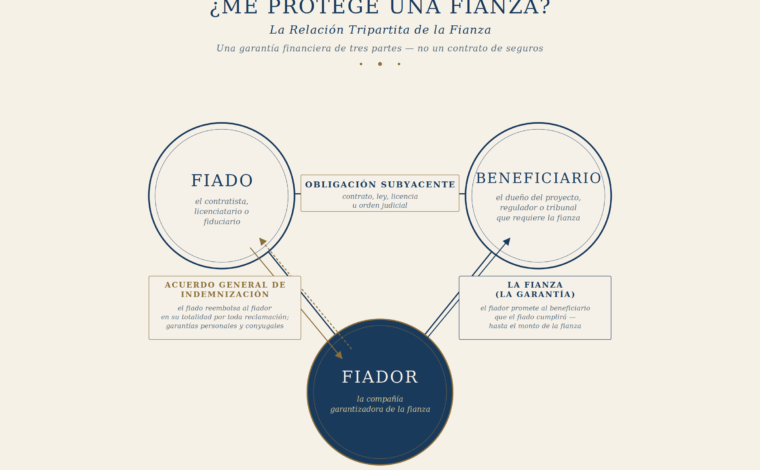
In this context, understand that guarantees do two things. First, they can lower the expected loss for a lender by inserting a creditworthy obligor between the lender and the underlying risk. Second, they can lower uncertainty by converting messy operational performance questions into claims payable under defined conditions, subject to exclusions, limits, and controls. That conversion is valuable in 2026 because lenders and investors are not simply worried about default. They are worried about recovery volatility. A guarantee, whether structured as a financial guarantee, a performance support, or a credit wrap around a debt instrument, can tighten the recovery distribution by making outcomes less dependent on judicial timelines, distressed asset markets, or the politics of workouts.
The most important point is that tighter credit standards cause demand for guarantees, not because borrowers prefer them, but because capital providers do. In a softer market, a sponsor can often negotiate around collateral gaps by offering pricing, relationship, or projected growth. In a tighter market, committees are obligated to explain, in writing, why they accepted weakness. A surety bond or financial guarantee provides a committee with a defensible rationale. It is not simply additional comfort. It is a mechanism that can be modelled, rated, and monitored. The guarantee can also be tailored. It can cover principal and interest, or it can cover specific payment waterfalls, or it can cover completion and revenue commencement, which often matters more than nominal balance sheet strength in infrastructure and construction-heavy projects. This flexibility makes surety or miscellaneous guarantee an increasingly common bridge between a borrower’s economic logic and a lender’s documentation logic.
At the same time, the guarantee itself does not do the job if the security package is poorly designed. In fact, the tighter the market, the more sophisticated the security package must be, because disputes emerge precisely when incentives diverge. The security package is the architecture that determines who gets paid, when, and on what evidentiary record. It is also the architecture that determines how quickly stakeholders can move from problem recognition to remedy. In 2026, investors will focus on several recurring vulnerabilities: weak collateral perfection, vague event definitions, uncontrolled cash leakage, and inconsistent intercreditor terms that produce litigation rather than recovery. The remedy is not more paper. The remedy is better paper, anchored to enforceable rights, clear triggers, and practical control mechanisms such as cash sweeps, reserve accounts, and step-in rights where relevant.
Tighter lending standards also increase the attractiveness of hybrid capital sources, especially private credit, which has expanded in emerging markets as bank lending tightens. Industry data reported recently shows record levels of private credit investment in emerging markets, with investors seeking yield and structure in sectors underserved by banks (Reuters, 2026). This growth matters for Dominican and regional borrowers because private credit often comes with stricter covenants and more bespoke documentation. Private lenders tend to price risk and demand remedies that are operationally executable. That orientation increases the value of guarantees and surety because they provide the kind of clean, claimable event profile that private credit underwriters can assess and securitize mentally. In other words, guarantees are not only a bank market tool. They are a language that speaks to private credit committees as well.
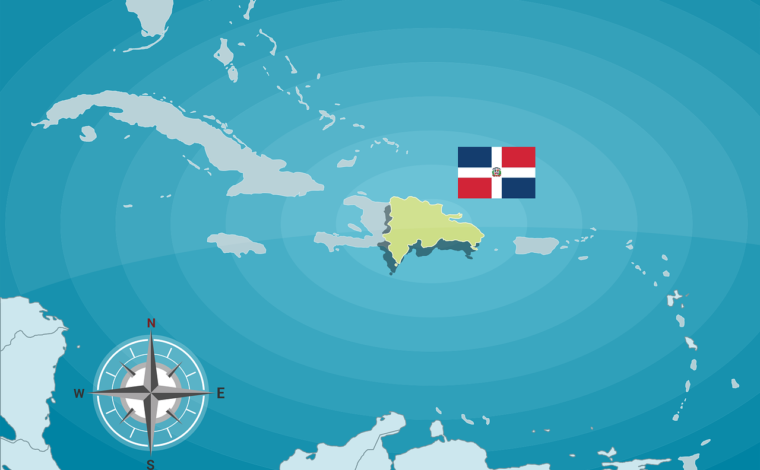
For the Dominican Republic, the practical applications are immediate in sectors that rely on dependable completion and performance, including public works, energy, logistics, tourism infrastructure, and any cross-border supply chain activity where contract performance is monetized through milestones. In these sectors, a well-structured performance instrument reduces the project owner’s downside, improves the contractor’s credibility, and can make lenders more willing to extend working capital because completion risk becomes better controlled. Internationally, the same logic extends to export-oriented businesses and dollar-earning enterprises, where creditors are less tolerant of operational surprises and where a strong security package must incorporate foreign exchange risk, transfer risk, and legal enforceability across borders. A guarantee with a properly drafted claims standard, plus a collateral package that is perfected and monitored, can materially improve the bankability of a transaction even when macro conditions are only modestly improving.
None of this should be interpreted as an argument for indiscriminate credit enhancement. The market’s tightening is in part a reaction to overconfidence and weak discipline in prior cycles. Credit enhancement only strengthens a transaction when it is aligned with real risk controls and when underwriting is honest about incentives and correlations. If a guarantee provider does not have the ability to evaluate project economics, sponsor behavior, and legal enforceability, the guarantee becomes a fragile promise that fails under stress. The same is true for security packages that look comprehensive but are not operationally executable. In 2026, sophisticated counterparties will distinguish sharply between “paper security” and “workable security.” The difference is whether the security package can be enforced quickly and predictably, and whether it meaningfully constrains bad behavior before default.
For firms focused on financial guarantees, surety adjacent credit support, and structured reinsurance solutions, this environment is an opportunity, but only for those that can demonstrate technical competence. Credit committees and project owners will increasingly ask pointed questions. What exactly is covered? What are the conditions precedent? What is excluded? How are disputes resolved? What is the claims timeline? How does the guarantee interact with collateral and intercreditor terms? These questions are not bureaucratic. They are the mechanism by which capital providers separate real credit enhancement from marketing. In a market shaped by modest growth, elevated debt service burdens, and selective risk appetite, the winners will be those who offer clarity, enforceability, and discipline in both underwriting and documentation (International Monetary Fund, 2025; World Bank, 2026; Reuters, 2026).
The bottom line is that 2026 is looking good, plenty of promise. As regional growth remains moderate and financing costs remain a binding constraint, lenders will continue to tighten standards in ways that make collateral quality, covenant design, and credit enhancement more valuable than ever (International Monetary Fund, 2025; World Bank, 2026). Guarantees and stronger security packages are not a sign of weakness. They are the mechanism by which borrowers and sponsors earn access to capital on terms that are stable enough to execute real projects. For Dominican Republic counterparties that want to compete for international capital and for international counterparties that want predictable outcomes in the Caribbean and Latin America, disciplined guarantees, surety performance bonds, and carefully engineered security packages are becoming part of the essential architecture of finance.
~ C. Constantin Poindexter Salcedo, MA, JD, CPCU, AFSB, ASLI, ARe, AINS, AIS, CPLP
Bibliography
- Bank for International Settlements. (2026, January 29). International banking statistics and global liquidity indicators.
- Fitch Ratings. (2026, January 27). Latin America credit outlook largely stable amid muted economic growth.
- International Monetary Fund. (2025, October). Regional economic outlook: Western Hemisphere.
- Reuters. (2026, February 25). Private credit in emerging markets surges to record, industry group says.
- Reuters. (2026, March 3). LatAm, Caribbean growth to slow to 2.1 percent in 2026 says IDB.
- S and P Global Ratings. (2026, February 10). Industry credit outlook: Latin America corporates.
- World Bank. (2026, January). Global economic prospects: January 2026.