
Catastrophe volatility, social inflation, maritime cyber exposure, and emerging UAV liabilities are reshaping underwriting discipline across the global reinsurance market. The novel complexity of risk in reinsurance has made us a market at an inflection point.
The global reinsurance market, valued at approximately $503 billion in 2026 and projected to exceed $1 trillion by 2035, is contending with a convergence of risk factors that are without modern precedent in their simultaneity and interconnection (Global Market Insights, 2025). For decades, catastrophe modeling, actuarial reserving, and treaty structuring operated within reasonably stable assumptions about loss frequency, severity, and correlation. Those assumptions are now under sustained pressure from multiple directions at once.
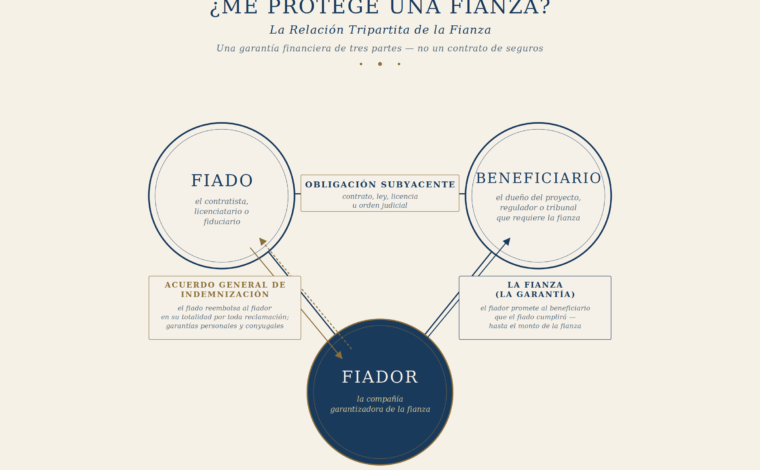
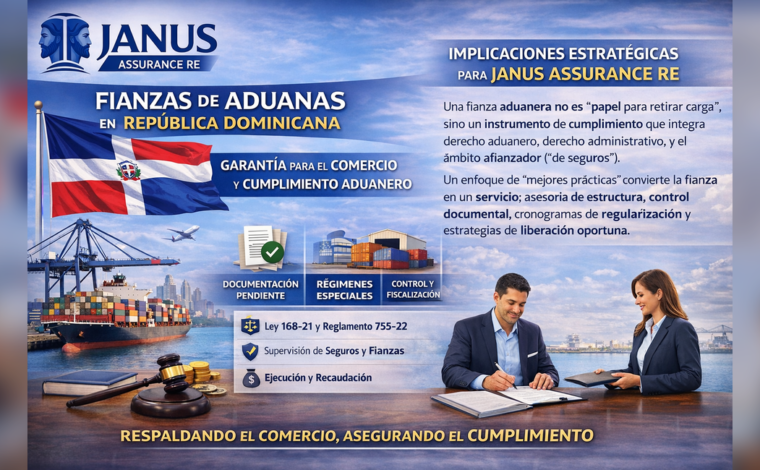
Specialty reinsurers and managing general agencies occupy a particularly sensitive position within this shifting landscape. Carriers such as Janus Assurance Re, a market for casualty clash and standard excess of loss contracts, quota share and per risk treaty agreements, catastrophe excess of loss protections, surety bonding, UAV/UAS coverages, marine cyber insurance, and financial guarantee instruments, must underwrite across lines that are each evolving rapidly and in ways that increasingly interact with one another. The underwriting teams at these organizations bear a disproportionate burden of analytical complexity, because the risks they evaluate often fall outside the standardized portfolios that dominate the broader market.
My piece here examines four principal vectors of compounding risk: catastrophe volatility, social inflation, maritime cyber exposure, and the emergence of unmanned aerial vehicle liabilities, and considers how experienced specialty underwriting operations are adapting their practices to maintain disciplined risk selection in an era of accelerating uncertainty.
Catastrophe Volatility and the Erosion of Historical Baselines
Global insured catastrophe losses now consistently exceed $100 billion annually. In 2025, insured losses reached an estimated $107 billion in the United States alone, driven predominantly by the Los Angeles wildfires — which generated approximately $40 billion in claims — and severe convective storms accounting for a further $50 billion (Markel, 2026; Baker Tilly, 2026). These figures confirm a pattern that has persisted for several consecutive years: the models that underwriters relied upon a decade ago routinely underestimate both the frequency and the geographic dispersion of natural catastrophe events.
For reinsurers structuring treaty catastrophe excess-of-loss agreements, this volatility reshapes the fundamental calculus of attachment points, rate-on-line, and aggregate exposure management. Guy Carpenter reported that property catastrophe rate-on-line declined by double digits globally during the January 2026 renewal cycle, driven by abundant capacity and a comparatively benign 2025 U.S. wind season (Guy Carpenter, 2025). Yet this softening unfolds against a backdrop of loss frequency that continues to test portfolio resilience. As Fitch Ratings noted in revising its global reinsurance outlook to “deteriorating” for 2026, softer pricing conditions and rising claims costs — particularly from more frequent and severe catastrophe losses — will exert sustained pressure on underwriting margins (Schneider, 2025).
“The fundamental challenge for specialty reinsurers is not any single peril, but the compounding interaction of perils that were historically evaluated in isolation.”
Carriers offering per-risk and catastrophe XOL protections must now model secondary peril interactions (i.e., wildfire following drought, severe convective storms intensifying alongside shifting atmospheric patterns) that do not fit neatly into legacy stochastic frameworks. The underwriting discipline established during the 2023 hard market, when attachment points rose sharply and terms tightened across the board, provided a necessary recalibration. Whether that discipline endures as competitive pressures mount will determine the sector’s capacity to absorb the next major loss event without destabilizing capital positions.
Social Inflation and the Casualty Reserving Challenge
Parallel to the physical peril landscape, the casualty lines that constitute a significant portion of specialty reinsurance portfolios are contending with a legal and societal phenomenon that has proven remarkably resistant to conventional actuarial correction. Social inflation — the tendency of insured claims costs to rise above general economic inflation due to shifting jury attitudes, expanded theories of corporate liability, and the growing influence of third-party litigation funding — is now among the most consequential risk factors facing the reinsurance industry (National Association of Insurance Commissioners [NAIC], 2025).
The scale of the problem has become difficult to overstate. In 2024, there were 135 nuclear verdicts — jury awards exceeding $10 million — against corporate defendants, representing a 52 percent increase over 2023. The aggregate value of those verdicts reached $31.3 billion, a 116 percent year-over-year increase (Marathon Strategies, 2025, as cited in APP Tech, 2026). These outsized awards are not confined to a single line of business; product liability, commercial auto, medical malpractice, directors and officers liability, and general liability are all significantly affected (American Property Casualty Insurance Association, as cited in TransRe, 2025). The plaintiff’s bar has refined sophisticated trial strategies, including the so-called reptile theory, that appeal to jurors’ survival instincts rather than evidentiary analysis, contributing to verdict inflation across jurisdictions (TransRe, 2025).
For reinsurers providing casualty clash excess of loss and standard casualty XOL protections, social inflation introduces a reserving challenge that compounds over time. Adverse development in the 2015–2019 soft market accident years has already necessitated significant reserve strengthening across the industry, and concerns persist regarding the adequacy of reserves for the more recent 2021–2024 underwriting years (Schneider, 2025). Third-party litigation funding, now a $17 billion global industry, further amplifies exposure by enabling plaintiffs to sustain litigation through extended timelines, increasing both defense costs and ultimate settlement values (NAIC, 2025; Swiss Re, as cited in NAIC, 2025). In this environment, the underwriting teams that differentiate themselves are those with deep loss data and the seasoning necessary to identify adverse selection signals before they manifest in reported losses.
Maritime Cyber Risk: A New Frontier for Specialty Underwriters
The digitization of global maritime infrastructure has created an exposure class that barely existed a decade ago and now demands dedicated underwriting attention. Modern vessels and port interfaces depend on integrated information technology and operational technology for navigation, propulsion monitoring, cargo planning, access control, and satellite communications. When these systems are disrupted, the consequences extend well beyond data loss into operational impairment that can trigger delayed sailings, unsafe conditions, cargo deterioration, contractual penalties, and multi-party liability disputes (Janus Assurance Re, 2026).
The regulatory environment is accelerating this exposure into an insurable imperative. The International Maritime Organization has emphasized that maritime cyber risk management should be integrated into existing safety management systems, encompassing functional elements for identification, protection, detection, response, and recovery (IMO, 2025). In the United States, the Coast Guard finalized maritime cybersecurity regulations effective July 2025, establishing minimum requirements for cybersecurity plans, designated cybersecurity officers, and documented incident response protocols for U.S.-flagged vessels and waterfront facilities (U.S. Coast Guard, 2025). At the classification level, the International Association of Classification Societies has advanced Unified Requirements UR E26 and UR E27 to embed cyber resilience standards into newbuild certification (IACS, as referenced in Janus Assurance Re, 2026).
Demand for cyber liability extensions within marine policies has increased by an estimated 42 percent, reflecting the industry’s recognition that this exposure requires explicit coverage rather than ambiguous interpretation under traditional hull, cargo, and protection and indemnity placements (Global Growth Insights, 2025). For specialty carriers and MGAs with the technical underwriting depth to evaluate operational technology architectures, vessel connectivity profiles, and shore-to-ship attack surfaces, marine cyber represents both a significant growth opportunity and a class requiring exceptional underwriting precision. The loss ambiguity inherent in cyber events — where a single intrusion can present simultaneously as hull damage, cargo loss, pollution exposure, and third-party injury — demands policy language that is explicit about triggers, exclusions, and coordination across marine lines (Janus Assurance Re, 2026).
Unmanned Aerial Vehicles: Insuring an Expanding Operational Envelope
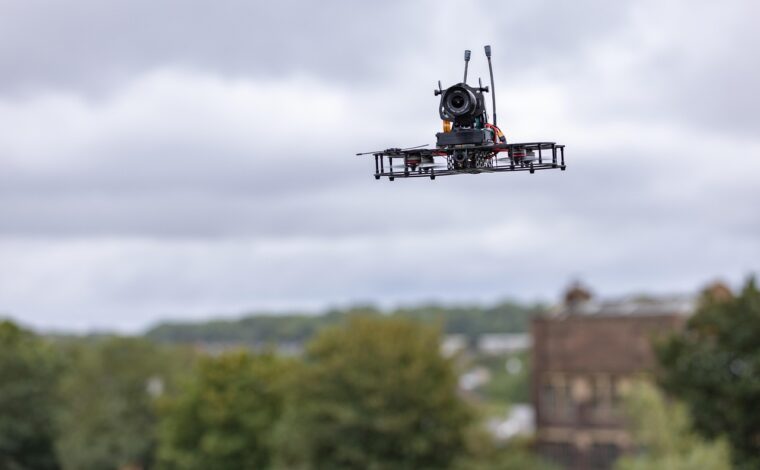
The global drone insurance market, valued at approximately $2.31 billion in 2025 and projected to grow at a compound annual growth rate of roughly 10 percent through the early 2030s, reflects the accelerating integration of unmanned aerial vehicles into commercial operations across agriculture, construction, energy, logistics, and media industries (Data Insight Market, 2026; Allied Market Research, 2024). This expansion is creating insurance demand that is structurally distinct from traditional aviation coverage, requiring underwriters to evaluate novel risk profiles that include beyond-visual-line-of-sight operations, autonomous flight systems, payload-specific liability, and increasingly complex airspace integration challenges.
Regulatory mandates are a primary market catalyst. Aviation authorities across North America, Europe, and the Asia-Pacific region are implementing requirements that condition commercial drone operations on evidence of liability insurance meeting specified minimum thresholds (Allied Market Research, 2024). As drone delivery services, infrastructure inspection programs, and precision agriculture applications scale — with the global commercial drone market projected to reach $90 billion by 2030 — the insurance products supporting these operations must evolve correspondingly (ZenaDrone, 2026). The integration of artificial intelligence, 5G connectivity, and real-time cloud data processing into UAV platforms is simultaneously expanding the operational envelope and introducing cyber liability dimensions that intersect with the broader cyber risk landscape.
For specialty carriers providing global UAV/UAS coverages, this market requires underwriting teams that understand not only traditional aviation loss mechanics but also the regulatory environments of multiple jurisdictions, the technological risk profiles of rapidly iterating platforms, and the emerging liability theories that will inevitably follow as commercial drone operations become ubiquitous. The underwriting challenge is compounded by the relative immaturity of loss data in this class, making experienced risk judgment rather than purely algorithmic pricing an indispensable component of sound portfolio construction.
Convergence and the Imperative of Underwriting Depth
The defining characteristic of the current risk environment is not the severity of any individual peril but the convergence of multiple evolving threats across lines that were historically siloed. A single commercial port operation may now present catastrophe property exposure, maritime cyber liability, drone inspection risks, surety obligations on construction contracts, and casualty claims amplified by social inflation, all within a unified risk profile that defies simplistic segmentation. Treaty structures such as casualty clash, excess-of-loss, and quota share agreements must account for correlation patterns that are only beginning to be understood.
In this environment, the carriers and managing general agencies that will sustain their relevance are those whose underwriting teams possess the depth of experience, analytical rigor, and market knowledge to evaluate interconnected risks with precision. Janus Assurance Re, with a senior underwriting cadre contributing sixty years of combined experience in risk review, ratemaking, form design, and business development, supported by the operational expertise of its exclusive MGA, Surety One, Inc., represents the model of a specialty operation structured for this complexity (Janus Assurance Re, 2026). The bespoke nature of modern risk requires bespoke underwriting responses: custom-fitted treaty structures, carefully considered attachment points, and the willingness to design coverage forms that address the actual exposures clients face rather than the exposures that legacy products were built to cover.
As the reinsurance market navigates softening pricing, abundant capacity, and the persistent accumulation of loss-cost pressure from climate, litigation, technology, and regulatory change, the distinction between underwriting that merely transfers risk and underwriting that genuinely comprehends it will become the sector’s most important competitive differentiator.
~ C. Constantin Poindexter Salcedo, MA, JD, CPCU, AFSB, ASLI, ARe, AINS, AIS, CPLP
References
- Allied Market Research. (2024). Drone insurance market size & share | Statistics report 2032. Allied Market Research. https://www.alliedmarketresearch.com/drone-insurance-market-A323694
- APP Tech. (2026, March 18). Social inflation and nuclear verdicts: Navigating soaring liability exposure. APP Tech. https://apptechllc.com/social-inflation-and-nuclear-verdicts-navigating-soaring-liability-exposure/
- Baker Tilly. (2026, January 29). Navigating the evolving insurance landscape: Trends, risks and strategies for 2026. Baker Tilly. https://www.bakertilly.com/insights/insurance-trends-risks-and-strategies-for-2026
- Data Insight Market. (2026, February 5). Emerging markets for drone (UAV) insurance industry. Data Insight Market. https://www.datainsightsmarket.com/reports/droneuav-insurance-1444183
- Global Growth Insights. (2025, September 18). Marine insurance market growth, size & trends 2025–2034. Global Growth Insights. https://www.globalgrowthinsights.com/market-reports/marine-insurance-market-105670
- Global Market Insights. (2025, December). Reinsurance market size & share, growth opportunity 2026–2035. Global Market Insights Inc. https://www.gminsights.com/industry-analysis/reinsurance-market
- Guy Carpenter. (2025, December 30). January 1, 2026 reinsurance renewal report. As reported in Insurance Journal. https://www.insurancejournal.com/news/international/2025/12/30/852636.htm
- Janus Assurance Re. (2026). Marine cyber insurance and maritime cyber risk in brief. Janus Assurance Re. https://janusassurancere.com/insurance/marine-cyber-insurance-and-maritime-cyber-risk-in-brief/
- Markel. (2026, January 21). Top 10 insurance trends for 2026. Markel. https://www.markel.com/insights-and-resources/insights/top-10-insurance-trends-for-2026
- Marsh. (2026). Social inflation and nuclear verdicts. Marsh. https://www.marsh.com/en/risks/social-inflation-and-nuclear-verdicts.html
- National Association of Insurance Commissioners. (2025, December 19). Insurance topics: Social inflation. NAIC. https://content.naic.org/insurance-topics/social-inflation
- Schneider, B. C. (2025, September 10). Competition to drive ‘deteriorating’ reinsurance market, more M&A in 2026. Carrier Management / Fitch Ratings. https://www.carriermanagement.com/features/2025/09/10/279287.htm
- TransRe. (2025, November). Social inflation: Examining the costs to the insurance industry. Transatlantic Reinsurance Company. https://www.transre.com/wp-content/uploads/2025/11/Social-Inflation-Overview-2025.pdf
- ZenaDrone. (2026, January 23). Best drone insurance 2026 — Compare cost & trusted providers. ZenaDrone. https://www.zenadrone.com/drone-insurance/