
Our Basic Framework for Expected Loss, Tail Risk, and Capital Resilience in Structured Credit and Surety Programs
The second part in my series about financial guarantee bonds looks at how we seek a crystal clear understanding of our obligation and the associated risks of the same. Structured credit wraps and surety-style financial guarantee bonds are marketed as credit substitution instruments, but their value proposition ultimately lives or dies on loss modeling discipline and stress-tested resilience. This essay provides a technical framework for modeling expected loss and tail loss for credit wraps and financial guarantees, integrating portfolio credit modeling concepts, concentration and correlation dynamics, and supervisory-grade stress testing principles. The goal is operational clarity, i.e., what must be modeled, how it is commonly parameterized, which assumptions dominate results, and how stress testing should be designed to reveal fragility in triggers, liquidity, and guarantor capital.
Loss modeling begins with a precise instrument definition
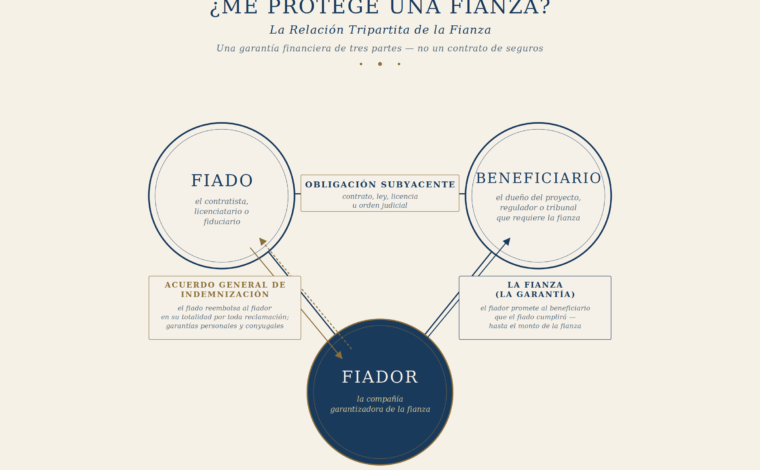
Financial guaranty insurance is defined broadly in regulatory guidance to include surety bonds, insurance policies, and indemnity contracts that pay upon proof of financial loss resulting from a failure to pay debt service or other monetary obligations (National Association of Insurance Commissioners, 2008). This definition is critical for modeling because it centers the risk on nonpayment outcomes and associated costs, rather than on physical perils. In a wrap or financial guarantee, the insurer or surety is not pricing a frequency-severity distribution of random accidents; it is underwriting a contingent obligation whose loss is typically driven by credit deterioration, macro regimes, and legal enforceability.
The historical monoline experience reinforces the point that credit enhancement narratives are not substitutes for robust tail-risk analytics. Central bank analysis of financial guarantors have emphasized that the business model’s vulnerabilities are transmitted through downgrades, valuation shocks, and interconnected exposures (the kind of system-level propagation that simplistic, low-correlation assumptions fail to capture) (European Central Bank, 2008). Scholarly work likewise highlights that financial guarantors can take unusually excessive risks because capital is not disbursed at inception, making the risk feel abstract until correlated claims materialize (Schwarcz, 2021). Those observations translate directly into modeling requirements: an analytically credible program must explain how it quantifies correlation, tail dependence, liquidity timing, and dispute-driven payment delays.
The expected-loss architecture for wraps and guarantees
Loss modeling for credit wraps and financial guarantees should start with a decomposed identity that separates underwriting risk from frictional risk:
Ultimate loss can be conceptualized as default-driven loss plus expenses, less recoveries. Default-driven loss is commonly parameterized by probability of default, loss given default, and exposure at default, but the wrap context requires additional terms for timing and contestability. A useful modeling decomposition is expected loss ≈ PD × LGD × EAD + expected claims expenses + expected dispute/coverage friction cost − expected recoveries.
Each component has distinct drivers and data requirements. PD is typically regime-sensitive; LGD is collateral- and jurisdiction-sensitive; EAD depends on amortization profiles, acceleration provisions, and whether the guarantee follows scheduled payments or becomes immediately payable upon a credit event. Supervisory and market analysis of credit risk transfer stresses that guarantees and insurance must be evaluated for whether the risk transfer is “clean,” whether participants understand the residual risks, and whether concentrations migrate in opaque ways (Joint Forum, 2005). In practice, that means PD–LGD–EAD inputs must be complemented by explicit modeling of enforceability and claims mechanics.
When banks use credit insurance and related protection as a credit risk mitigant, industry research emphasizes that the effectiveness of risk mitigation depends on policy features, clarity of terms, and quality of protection providers—factors that translate directly into loss and stress assumptions (IACPM & ITFA, 2023). For wraps, the model must therefore include a term for payment delay probability and delay duration, because “credit substitution” is economically incomplete if the protection fails to substitute liquidity.
Portfolio credit modeling: correlation and concentration are not optional
Wrap and guarantee portfolios are inherently exposed to correlation: sector downturns, sovereign stress, FX devaluation, refinancing freezes, and commodity shocks can move many obligors together. The Basel internal ratings-based framework formalizes correlation by embedding credit losses in an asymptotic single risk factor model where systematic risk drives co-movement across obligors, and asset correlation is a central parameter (Basel Committee on Banking Supervision, 2005). Even if a guarantor is not regulated as a bank, the underlying mathematics remain instructive: tail loss is primarily a function of correlation and concentration.
A critical warning from BIS research on concentration risk is that concentration violates key assumptions of the asymptotic single risk factor model—either because idiosyncratic risk fails to diversify in small portfolios or because sectoral concentrations introduce multiple systematic factors (Basel Committee on Banking Supervision, 2006). In credit wraps and financial guarantees, concentration is often disguised by deal labels. A portfolio can appear diversified by obligor name while still being concentrated in a single macro driver, such as housing, energy, public procurement payment cycles, or a single sovereign’s convertibility constraints. Modeling must therefore compute concentration metrics and incorporate sector and geography factor structure rather than relying on a single average correlation.
Rating-agency criteria for bond insurers, developed in the shadow of the financial crisis, also emphasize capital adequacy under stress, risk position, and exposure management—recognizing that insured portfolios can behave nonlinearly under correlated scenarios (S&P Global Ratings, 2011). Even when the program is not a monoline municipal wrap, those analytical expectations remain relevant: the guarantor’s survival is the product.
Modeling triggers, timing, and dispute risk as stochastic variables
For credit wraps and surety-style guarantees, legal and operational frictions can dominate outcomes. Trigger type matters—failure-to-pay triggers behave differently than insolvency-based triggers—and conditions precedent can convert a “pay on default” promise into a “pay after proof” obligation. Regulatory responses after 2008 underscored best practices for financial guaranty insurers, reflecting concerns about risk governance and product scope (New York State Department of Financial Services, 2008). From a modeling perspective, those concerns should be operationalized as variables, not narrative:
Payment timing should be modeled as a distribution, not a single assumption. A practical approach is to define a “timely payment probability” conditional on default and then model delay in months where timely payment fails. Dispute probability can be modeled as a function of documentation complexity, jurisdiction, and obligor conduct indicators. Claims expense should scale with dispute complexity and cross-border enforcement likelihood.
Surety-style financial guarantees add another distinct dimension: recovery rights through indemnity, collateral, and subrogation can reduce ultimate loss but may not eliminate liquidity strain. Therefore, loss models should distinguish ultimate loss from liquidity loss. In stress testing, liquidity loss can be existential even when ultimate loss is recoverable, because capital impairment can trigger rating or confidence spirals (European Central Bank, 2008).
Stress testing: principles, scenario design, and model governance
Supervisory-grade stress testing principles provide a blueprint for what sophisticated stakeholders expect. The Basel Committee emphasizes that stress testing should be embedded in governance and decision-making, cover a range of risks and business lines, and be used as a forward-looking risk management tool rather than as a compliance exercise (Basel Committee on Banking Supervision, 2018). Earlier Basel guidance similarly emphasized the importance of designing stresses that reflect the kinds of dislocations observed in crisis conditions (Basel Committee on Banking Supervision, 2009).
Layering of credit wraps and financial guarantees for stress testing
A macro stress should shock variables that drive correlated defaults and LGD, such as interest rates, refinancing spreads, unemployment, commodity prices, FX depreciation, sovereign funding stress, and payment system disruption. A second layer should impose market structure stresses, such as liquidity freezes and covenant tightening that accelerate EAD through drawdowns or technical defaults. A third layer should impose legal-operational stresses: higher dispute rates, slower enforcement, payment delays, and recoveries pushed outward in time.
A sophisticated stress program should also include reverse stress testing: identify the smallest set of adverse assumptions that breach capital or liquidity limits, then ask whether those assumptions are plausible. This technique directly targets the “abstraction bias” problem by forcing the institution to articulate the boundary between comfortable narratives and ruinous tails (Schwarcz, 2021). It also addresses the Joint Forum’s concern that risk transfer can create hidden concentrations and misunderstandings (Joint Forum, 2005).
What “good” looks like in published methodology
A market-facing white paper that credibly claims expertise in loss modeling and stress testing for wraps should present, at minimum, a transparent parameterization of PD, LGD, and EAD, and how they move under scenarios, with sensitivity analysis showing which parameters dominate expected loss and tail loss. A factor model narrative that addresses correlation regimes and concentration management, consistent with the conceptual role of systematic risk in portfolio credit modeling (Basel Committee on Banking Supervision, 2005; Basel Committee on Banking Supervision, 2006). A stress testing governance and scenario design section aligned to supervisory principles, including model risk controls, independent review, and explicit limitations (Basel Committee on Banking Supervision, 2018). Finally, a liquidity-and-timing module that treats payment delay and dispute rates as stochastic features of the product, not afterthoughts, reflecting the historical lesson that guarantor fragility propagates through confidence and liquidity channels (European Central Bank, 2008).
Loss modeling and stress testing are the technical core of any structured credit wrap or surety-style financial guarantee program. A credible framework integrates PD–LGD–EAD discipline with explicit modeling of correlation, concentration, trigger mechanics, payment timing, dispute risk, and recovery dynamics. Stress testing must be scenario-rich and governance-embedded, designed to reveal how quickly substitution can fail when macro regimes shift, documentation is tested, and liquidity becomes scarce. When these elements are rigorously quantified and transparently disclosed, a guarantor’s “credit substitution” proposition becomes analytically defensible and operationally credible.
~ C. Constantin Poindexter, MA, JD, CPCU, AFSB, ASLI, ARe, AIS, AINS
Bibliography
- Basel Committee on Banking Supervision. 2005. An Explanatory Note on the Basel II IRB Risk Weight Functions. Bank for International Settlements.
- Basel Committee on Banking Supervision. 2006. Studies on Credit Risk Concentration. Working Paper No. 15. Bank for International Settlements.
- Basel Committee on Banking Supervision. 2009. Principles for Sound Stress Testing Practices and Supervision. Bank for International Settlements.
- Basel Committee on Banking Supervision. 2018. Stress Testing Principles. Bank for International Settlements.
- European Central Bank. 2008. “Monoline” Financial Guarantors: The Business Model and Linkages with Financial Institutions and Capital Markets. Financial Stability Review (Focus Box), June 2008.
- International Association of Credit Portfolio Managers, and International Trade and Forfaiting Association. 2023. Credit Insurance as a Credit Risk Mitigant to Diversify Risk and Enhance Bank Lending Capacity. White paper, June 2023.
- Joint Forum. 2005. Credit Risk Transfer. Basel Committee on Banking Supervision, International Organization of Securities Commissions, and International Association of Insurance Supervisors.
- National Association of Insurance Commissioners. 2008. Financial Guaranty Insurance Guideline (GL-1626). October 2008.
- New York State Department of Financial Services. 2008. Insurance Circular Letter No. 19 (2008): “Best Practices” for Financial Guaranty Insurers. September 22, 2008.
- Schwarcz, Steven L. 2021. “Regulating Financial Guarantors.” Harvard Business Law Review 11 (1): 159–192.
- S&P Global Ratings. 2011. Bond Insurance: Rating Methodology and Assumptions. Criteria, August 25, 2011.