
The Definitive Technical Framework for Structured Credit Substitution and Surety Style Guarantees
In structured finance and specialty risk transfer, a credit wrap is best understood as a form of synthetic credit enhancement that seeks to substitute the credit standing of a guarantor for the payment risk of a defined monetary obligation. My blog posting here provides a practical, scholarly framework for analyzing structured credit wraps and surety-style financial guarantees, distinguishing credit substitution from structural credit enhancement, clarifying the legal architecture that makes a wrap enforceable, and identifying the risk drivers that determine whether substitution is reliable or illusory.
Defining the instrument: financial guaranty as a family that includes surety and indemnity
A credit wrap is not a single legal form. It is an economic function implemented through a policy, surety bond, or indemnity-type contract. Regulatory guidance defines financial guaranty insurance broadly to include surety bonds, insurance policies, and indemnity contracts under which loss becomes payable upon proof of financial loss resulting from an obligor’s failure to make debt service or other monetary obligations (NAIC, 2008). Accounting literature similarly characterizes financial guarantee contracts as protection against specified default events, reinforcing that the core analytic object is nonpayment and credit event risk rather than physical loss risk (PwC, 2024). Market practice calls these instruments wraps because they are placed around an underlying obligation. Supervisory guidance describes wraps as pledges to make scheduled principal and interest payments if the issuer fails to do so, and notes that rating agencies historically conferred the guarantor’s rating onto the wrapped issue (New York State Department of Financial Services, 2008).
Credit substitution versus structural credit enhancement
A central analytic distinction is between structural credit enhancement and credit substitution. Structural credit enhancement operates inside the transaction and includes mechanisms such as subordination, overcollateralization, reserve accounts, covenants, and cash flow waterfalls. These tools reallocate losses and reorder payment priority without importing an external balance sheet. Credit substitution operates outside the transaction. A surety or financial guarantor promises payment upon defined trigger conditions, shifting the lender or investor’s primary risk focus to the guarantor, to the extent the promise is enforceable and timely.
Central bank analysis of the monoline model states the substitution logic plainly. Financial guarantors enhance the credit rating of insured securities by substituting their credit risk for the risk of the instruments they insure, thereby supporting lower cost placements and improved liquidity (European Central Bank, 2008). This substitution lens is consistent with supervisory framing of credit risk transfer as a spectrum that includes guarantees and insurance. It is also consistent with the long-standing question regulators ask. Do these transactions accomplish a clean transfer of risk, or do concentrations and misunderstandings migrate elsewhere (Joint Forum, 2005).
A usable taxonomy for structured credit wraps and surety-like financial guarantees
For underwriting, structuring, and claims certainty, classification by trigger, timing, and legal character is more useful than naming conventions. A practical taxonomy includes four distinct categories.
- Failure to pay wraps provide that payment is due when the obligor fails to pay scheduled amounts after defined grace and notice mechanics. These most closely approximate pure substitution because the wrapped promise tracks the underlying payment schedule (NAIC, 2008; New York State Department of Financial Services, 2008).
- Insolvency or credit event wraps tie payment to insolvency, restructuring, or defined credit events. These can reduce opportunistic calls but increase proof burdens and dispute risk (PwC, 2024; Joint Forum, 2005).
- Judgment or award-based guarantees make payment contingent on a final judgment or arbitral award. These can be strong for ultimate recovery but weak for liquidity substitution because payment timing becomes litigation dependent (NAIC, 2008).
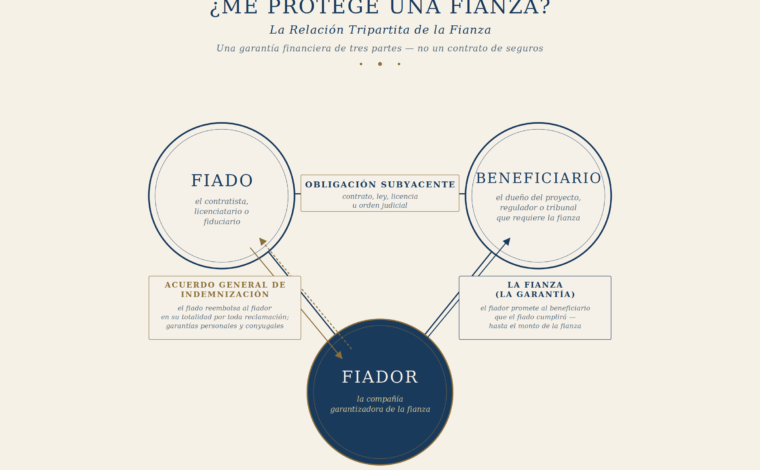
- Surety-style financial guarantees are tripartite undertakings involving principal, obligee, and surety, paired with strong post-payment recovery tools. While economically they can function as credit wraps, legally they are commonly supported by indemnity and collateral rights against the principal and indemnitors (NASBP, n.d.).
Taxonomy matters because substitution is only commercially meaningful if it substitutes both loss and liquidity. A guarantee that pays only after extended dispute resolution may reduce ultimate loss but fails to deliver the cash flow continuity that many financing structures require (European Central Bank, 2008).
Legal architecture: enforceability, conditions, and recovery rights
Because the product is a promise about future payment, its reliability depends on the chain from trigger to proof to payment to recovery. In surety markets, the general indemnity agreement is a core enforcement and recovery mechanism. Industry legal guidance explains that indemnity agreements commonly require indemnitors to reimburse the surety for losses and expenses incurred by reason of issuing the bond and notes that courts repeatedly enforce such contractual indemnity provisions (NASBP, n.d.). This transforms the surety-like financial guarantee into a two-sided structure. The obligee receives a payment promise under defined conditions. The surety expects to be made whole through indemnity, collateral, and subrogation or workout.
In financial guaranty contexts, regulators have emphasized disciplined practices because the model can invite risk-taking and correlated exposures. New York’s best practices letter discusses the historical wrap model, the role of ratings, and the need for standards designed to protect policyholders and the public (New York State Department of Financial Services, 2008). This is what appetite-less insurance call the “Appleton” thing.
The risk drivers that determine whether substitution is real
A wrap should be analyzed as transforming risk into guarantor risk plus contract friction risk, not as removing credit risk. Trigger precision and defenses matter because ambiguous triggers, expansive conditions precedent, cure periods, or notice traps increase denial vectors and delay. When timeliness is the objective, wording precision is credit engineering (NAIC, 2008; PwC, 2024).
Correlation and concentration are critical. The monoline experience illustrates how substitution can fail systemically when exposures assumed to be low-correlated become highly correlated under stress. Central bank analysis describes how capital shortfalls, downgrades, and insured security value losses are transmitted across the financial system (European Central Bank, 2008).
Incentives and delayed loss dynamics also matter. Scholarly analysis argues that financial guarantors can be prone to unusually excessive risk-taking because they do not disburse capital at inception, making risk feel abstract until correlated losses materialize (Schwarcz, 2021).
Clean transfer and transparency remain perennial supervisory concerns. The Joint Forum’s report highlights recurring questions, including whether risk transfer is clean, whether participants understand the risks, and whether concentrations migrate inside or outside the regulated sector (Joint Forum, 2005).
Capital and regulatory treatment can be decisive in bank use cases. Market practice and survey-backed analysis emphasize policy features and clarity needed for effective risk mitigation and, where applicable, capital treatment (IACPM and ITFA, 2023).
Implications for structuring and credible market communication
A rigorous framework improves both underwriting and marketing discipline. The most defensible market statement is that a wrap substitutes obligor credit risk with guarantor performance risk, while introducing additional dimensions: documentation ambiguity, dispute risk, and timing or liquidity risk. That framing aligns with central bank descriptions of the wrap model’s function (European Central Bank, 2008) and with supervisory emphasis on understanding and managing credit risk transfer-related concentrations and incentives (Joint Forum, 2005; Schwarcz, 2021).
Practical diligence questions follow directly. What precisely triggers payment? What is the payment timing standard? What defenses are preserved? How is claims handling governed? What is the guarantor’s concentration policy? What recovery rights are contractually secured, including indemnity, collateral, and subrogation? These are the questions that separate credible substitution from superficial credit enhancement language.
Structured credit wraps and surety-style financial guarantees are best analyzed as synthetic credit enhancement through credit substitution. Substitution is commercially valuable only when it is enforceable, timely, and supported by disciplined risk governance that manages correlation, incentives, and concentrations. A clear taxonomy paired with an explicit risk driver framework enables better structuring, rigorous underwriting, and more credible market education.
~ C. Constantin Poindexter, MA, JD, CPCU, AFSB, ASLI, ARe, AIS, AINS
Bibliography
- European Central Bank. 2008. “Monoline” Financial Guarantors: The Business Model and Linkages with Financial Institutions and Capital Markets. Financial Stability Review (Focus Box), June 2008.
- International Association of Credit Portfolio Managers (IACPM), and International Trade and Forfaiting Association (ITFA). 2023. Credit Insurance as a Credit Risk Mitigant to Diversify Risk and Enhance Bank Lending Capacity. White paper, June 2023.
- International Organization of Securities Commissions (IOSCO). 2005. Credit Risk Transfer. IOSCO Report.
- Joint Forum. 2005. Credit Risk Transfer. Basel Committee on Banking Supervision, International Organization of Securities Commissions, and International Association of Insurance Supervisors.
- National Association of Insurance Commissioners (NAIC). 2008. Financial Guaranty Insurance Guideline (GL-1626-1). October 2008.
- New York State Department of Financial Services. 2008. Insurance Circular Letter No. 19 (2008): Best Practices for Financial Guaranty Insurers. September 22, 2008.
- PwC. 2024. Financial Guarantee Insurance. Viewpoint (Insurance Contracts accounting guide), May 2024.
- Schwarcz, Steven L. 2021. “Regulating Financial Guarantors.” Harvard Business Law Review 11 (1): 159–192.
- S&P (Standard & Poor’s). 2011. Bond Insurance: Rating Methodology and Assumptions. Criteria, August 25, 2011.
- National Association of Surety Bond Producers (NASBP). n.d. Legal Spotlight: Help Contractor Clients Understand Surety’s General Indemnity Agreement. Pipeline newsletter.
- International Credit Insurance and Surety Association (ICISA). n.d. Surety Bonds: What They Are, How They Work. ICISA industry resource.